I am thinking about fuel injecting an 1835cc engine that is going to find a home in my Baja (if I ever finish it!).
After spending some time with my brother in his Baja with a bigger engine, and him having all sorts of problems with the carbs flooding and flat spotting at the worst possible moment I have decided to do a little research about fuel injection. I wish to use an injection system that uses an Oxygen sensor in the exhaust (I believe that they are refered to as closed systems). I know that these systems are available as kits from the US, however the price is a little silly (OK, very silly!!)
My question is, is it possible to get a fuel injection system out of some other brand of vehicle, and modify the fuel map to suit the VW engines. I feel that this would be the best way of doing it as you can pick up wrecked late model vehicles with fuel injection for next to nothing (eg, Hyundi, Suzuki etc) - much cheaper than the systems in the US, and from what I can see, they would only require a small amount of engineering work/modification to fit.....
Has anyone had any experience with something like this? Is anyone else interested in performing this sort of mod to their vehicle? I can't help thinking that an easy starting, smooth running and economical induction system would be a great thing to have!!
I think that a good, well-engineered solution for the Type I engine based on low-cost components (e.g. the Delco ECU from the Camira) would be very popular, especially as people are paying over $1K for Webers.
Good luck,
Baja Wes ·
ratty 63 wrote:I can't help thinking that an easy starting, smooth running and economical induction system would be a great thing to have!!
I think sticking a jap motor in will be quicker, easier and cheaper. That's why there are a lot of people going that way. Especially for something like a baja.
ratty 63 ·
Hi all,
Thanks for your thoughts and links - I am in the process of trying to find someone who has had experience with re-mapping "OEM" ECU's just to see what is involved and the level of difficulty. I have a feeling that it will be too difficult to reprogram them, but the idea behind this system is to be as affordable as possible without out being "cheap" - ie: works without compromise without expense.
I had also considered making it as easy to install as possible with the intention of publishing a "how to" page on the Web for anyone who is interested in the conversion. Therefore, the more "bolt on" parts the better.
I am going now, to investigate the ECUs that Ben mentioned - has anyone had any experience with these system? What are they like to set up (from a software point of view). Just so that you know, I'm not scared of playing with electronics and computers - I am a software engineer and have had experience as an aircraft radio tech (but didn't finish my study in this field).
Wes, whilst I can see that it would be easier to set up a fuel injection system for an engine that it is designed to fit, I really am a big fan of the air cooled VW stuff. There are so many of them still out there on the roads I just feel that people might like an alternative to their worn carbs, that will also make the vehicles better to drive in all conditions. I have seen your conversion and I have to say that it is very impressive - but in my mind, water and engines don't mix. (It seems that it always finds its way out at the worst possible time!!) 🙂 Although a few more Kw would be nice....
Is anyone running an EFI system on their air cooled VW with an aftermarket ECU? Any comments?
I have heard good reports about cal maker, its reprogrammed GM ECUs.
I cant tell you how much nicer my car drives now after running IDAs for years.
1302Steve
Baja Wes ·
ratty 63 wrote:Wes, whilst I can see that it would be easier to set up a fuel injection system for an engine that it is designed to fit, I really am a big fan of the air cooled VW stuff.
That's cool :thumb I can see what you want to do, and I had the same idea's once. If you do set-up a how to page and managed to do the entire system on a budget then that would be great.
The problem you will find is if you keep it cheap, then it will be very rough EFI by todays standards. If you set-up a newer technology EFI system it will cost you, ask Ben for a price on how much he would set-up EFI on your motor for and you will see what I mean.
The jap motor's have multi-point sequential EFI which makes them run beautifully smooth down low, great for a Baja. Just don't go past the jap motor option so quickly. Try to get a ride in a jap motored vw, it might change your mind. Where do you live? If you had an oval I would say stay VW powered, but for a baja or buggy I reckon the jap motors are the way to go.
Baja Wes ·
btw, the EFI discussion seems to come up here regularly. Here are two old posts on the matter;
Delco systems using the 808 based ecu (Camira, N13 Pulsar and VN ? VP VR commodores) are multi point sequential systems.
The software that the tuners use is called Kalmaker - look it up on the web, they have a decent web page which could fill in a few questions quickly for you.
As far as I understand it, to have a Delco reprogrammed you need to change the EPROM chip in it with a programmable one from Kalmaker (in the eastern states somewhere, I think sydney). I think these chips go for about $450. That and the purchase of the kalmaker software and you can tune the bloody thing yourself if you want to.
I'm still planning to go efi myself too. I agree - air cooled is cool, and to go efi on a vw motor would be great. Wes keeps forgetting that all Jap motors are water cooled, radiators are easy to mount in a Baja or buggy, but result in some fairly major cutting in a full bodied beetle. Dont get me wrong ! - I love engine conversions. Reubs car and Wes's baja are two of the best I've ever seen (and thats not just in the vw world either). Vut its horses for courses, and my horses are going to be provided by what Mr Porsche intended to put in the back (albeit just slightly tweaked 🙂 )
The other way you can do it is to get a friend in the states and import the full injection gear off of a mexican beetle. There was a Haltech ecu and mexican beetle manifolds and wiring loom and sensors for sale on here a month or so ago for $1000 - never heard if the guy sold it or not.
Keep looking, but do your homework first and plan the entire system before you purchase anything.
Doug
Baja Wes ·
Doug Sweetman wrote:Wes keeps forgetting that all Jap motors are water cooled, radiators are easy to mount in a Baja or buggy, but result in some fairly major cutting in a full bodied beetle.
I don't forget, that's why I said...
Baja Wes wrote:If you had an oval I would say stay VW powered, but for a baja or buggy I reckon the jap motors are the way to go.
😀😀😀😀😀
If you've mutilated them enough to make it a baja / buggy, then you might as well go a step further and stick a jap motor in there :thumb
Having said that I would like to see someone get a cheap VW motor EFI system sorted. There's a lot of interesting ideas floating around. 🙂
Doug Sweetman ·
🙂 Always on the ball wes !
Are you ever going to stick a set of slicks on the rear of yours and take it down the drag strip ? Would be interesting to see your times..... should be quick (esp if 6.3 second 0 - 100 is anything to go by)
vw59 ·
Camira $250 trading Post - for that you get injectors/ computer, senors, map sensor, throttle body, fuel regulator.
Just need an old manifold, welder and external fuel pump. You get most of these parts off ebay!
The cost is paying the Delco accredited software workshops to stuff around.
The cheaper alternative is a screw driver Microtech if your going for rock bottom costing.
Surely someone here is looking for cheap EFI and willing to put the time in to learn. I did it, great experience loved splicing looms together and learning the do's & dont's of automotive. Best way to get a handle on technology.
Cheers Leigh
ratty 63 ·
Leigh, did I understand you correctly? Are you running a Delco EFI computer in your vehicle?
I have spent all day looking around on the internet and it looks like the Delco system is the best way to go (it appears to be the most flexable), however I am trying to clarify the total cost of such a system - it appears to require an upgrade board ($550 :o) to be able to be programmed or an Eeprom burner (which requires a royalty to be paid for every new Eeprom you burn🙁 ).... I'll post the results as soon as I get them
Any comments anyone...?
ratty 63 ·
...Wes, whilst I am asking questions, what other mods did you have to do (specifically in relation to the FI) to your vehicle - ie: bigger fuel lines, surge tanks, etc? How did you go about doing the mods? Any pics?
Ross
Baja Wes ·
Listen to Leigh (vw59), his car is very very nice, and he's a friendly guy too. 🙂
As for mods, yes I had to do quite a few. 8mm feed and return fuel lines, a surge tank. Some of the info is in the other two posts, the rest is on my website...
Geeez thanks for that Wes, nah I'm just trying to be helpful. I learned the hard way the first time, so like to help out others where I can.
No I'm running an aftermarket Autronic unit. I looked into Delco and like you suggested getting the EPROM's reprogrammed was the most expensive part. That's why I suggested a screwdriver Microtech, they are very very cheap, reasonably old but do work. Sure they aren't the latest and greatest but it will work fine. Many cars here in Australia used them for years with great success until technology moved along with laptops and handsets.
Like you said the ancillaries are the cheap bit the programming costs the heap. But if you can get an aftermarket unit you can play with it yourself until it's close to correct, then hire an EGO sensor to get it spot on.
The way I see it is my time is free and I'm learning, but someone elses time ( Delco programmer) costs money plus I'm not able to change the program if you make changes to the engine ie: camshaft, etc etc. Plug & Play is my way of looking at it.
Hope this helps
Cheers Leigh
:bounce:bounce
ratty 63 ·
Thanks for you comments and suggestions, they have enabled me to spend an entire day checking out EFI products on the net....
I have had a look at a number of different types of FI systems that are available and each of them have their advantages and disadvantages. The one that has generated the most interest (in my mind:o) is the Delco system, which uses the Kalmaker software to program it. This software allows the user to program their own FI computer to whatever settings they choose using a laptop computer (PC) - apparently their isn't much that can't be changed! Their customer service is good to - I have sent emails to all the companies that I have looked at so far and, although only early days yet, the Kalmaker crowd are the only ones that have responded.😀
The price is a little steep for a budget system - $1100 - includes software, Delco 808 computer with real time conversion. Still required (not included in this price) are all the sensors, injectors etc - BUT - these are the computers used in the GM range of cars (2.0 Camira, VN... Commodores, Astras etc) and therefore should be quite easy to find compatable sensors and even entire computers in the future. Apparently (according to Tpiconn - the sellers of the Kalmaker system), the distributer from the Camira will fit the VW's once a "flange on the housing is turned down to fit". Sounds fairly easy so far.
I have just emailed them again to confirm the price of the 808 computer with the real time conversion on its own - incase I decide to do another different car in the future, as I will already have the software it will be less than the initial price, but there are several different prices listed on their web site. If you would like to take a look yourself go to: http://www.kalmaker.com.au/index.html
Any comments anyone? I would like to know what you think....
Thanks Wes for the link to your web site - WOW! What else can I say - its difficult enough finding the time to do a conversion like that, let along keep a step by step Diary/web site of the conversion process. You were right - it did answer a number of questions. I was surprised that the fuel in the surge tank appeared to suffer from overheating! Now thats something I wouldn't have thought of! I have one question for you - how did you go about securing the two new fuel lines in the tunnel? Just at each end (where they exit the tunnel) or did you cut into the tunnel and fix it with brackets? Would it be acceptable to run the lines down the outside of the tunnel (in a similar position to the rear brake line, but on the opposite side) or is there some reason why this should not be done?
Also, (sorry, I know that this post is getting quite long🙁 ) Leigh, how did you perform the fuel line mods to your vehicle and what sort of fuel surge system are you using? I am so certain that I am installing an EFI system that I am about to do the fuel line mod to the pan now (whilst it is seperated from the body) so any info will be a great help.
Thanks heaps everyone - please feel free to comment on any of the above - it all helps😀
Ross
vw59 ·
Hi Ross,
I completely beefed up my pan, ie: welded in an IRS rear end, seem welded the rear frame horns, dimpled the frame horns for Kobi CV's so I cut the tunnel open in a few places and placed U brackets made of 1/4 bar inside the tunnel to thread fuel hose through. It's important to keep these lines secure and free from rubbing on the clutch cable, pedals etc as well as where the lines enter and exit the tunnel (mine exit either side of the gearbox nose cone)
I placed mine in the tunnel as I think it looks daggy to have things hanging under the car. We are lucky enough to have a clean sheet of steel on a volkswagen underneath so why not keep it this way + can't catch on jacks etc etc
For a surge tank I've secured a polished surge pot on the front beam (2 litre capacity) fed from the tank by a Carter low pressure pump. Then feeding the injectors using a VL commodore fuel pump). I originally used a VL commodore EFI pump for feeding the surge pot also but it lasted 25000 km's then died. The fuel was cavitating in the pump. This taught me to use a low pressure pump to feed the surge pot, I originally used the VL for this because it was cheaper than a low pressure pump - strike 1 didn't work forever!!!
Leigh
ratty 63 ·
I understand where you are comming from Leigh, it would look much neater to have the lines inside the tunnel, however I was thinking of running the lines down the inside of the car, against the tunnel (on the passenger side) for two reasons:
1: much easier to install - no cutting and welding and
2: I have already painted the pan (did this months ago, before this idea came up), so the minimum damage that can be done would be best.
This said, I would prefer to spend another couple of days setting the lines up correctly, rather than bodging it all up and have to do it again in the future or not being happy with it.
It looks like the use of a low pressure pump to feed the surge pot is a must, from reading what you have just said, combined with what Wes has written. I'm off to get some prices on this stuff. If you think of anything else that could help, please let me know.
Oh, yeah... what size fuel line have you used/would you recommend?
Thanks again
Ross
Baja Wes ·
I ran metal fuel lines through the tunnel, so didn't use any bracket inside. I clamped them together, and they are firmly attached at either end. They don't seem to want to move anywhere.
8mm fuel line feed and return. You should try to meet-up with some of the QLD buggy/baja boys. There are quite a few either with jap conversions or in the process of doing jap conversion.
ratty 63 ·
Just recieved an Email from the Kalamker crowd (already!!), the cost of an additional computer is $550 + exchange computer (as they require a mod to be done)..hmmm...so for each car I set up it will cost $550+. Not too bad I suppose - What does everyone think? Would you be willing to pay $550 for a user re-tunable EFI computer (only)? Is it a reasonable deal? What are your thoughts? (No, I'm not thinking of selling them - I'm just looking for opinions)
Thanks for the surge tank link Wes, very interesting. I think I can see how it has to be done now. Originally I thought that the fuel lines would have to be attached inside the tunnel (cutting and welding🙁 ) but as they are 8mm each, clamped together and attached at either end of the pan, I imagine they would be fairly rigid - the trick is getting them in the right place to start with!
OK, on a slightly different line here - does anyone know anything about Oxygen sensors (the ones that go in the exhaust and provide feedback to the computer). I want to know how close the have to be to the heads (is in the 3 bolt flange between the extractors and the muffler close enough to get an accurate reading?). Also, I read somewhere (I forget where) that there are two basic types - a heated and non-heated sensor. Does this make any difference to the location or operation of the sensor?
Hmmm...so much to think about.
Wes, I will try to catch up with the Qld buggy/baja boys - are any of you coming to the Gold Coast Show and Swap? Maybe I will catch up then.
Ross
Baja Wes ·
Basically an oxygen sensor has to get up to around 400 deg C before it starts working, so it won't work when the car is cold.
So they invented heated oxygen sensors, that have an electric heater in them to keep them at operating temperature, and also to get them up to operating temperature quickly and improve cold engine running / emissions.
With the VW having the merge so far down the exhaust, you'd probably need a heated sensor to keep the sensor at operating temperature. You might get problems with carbon on it when it's too far back, I'm not real sure. If the EFI system is fairly basic (open loop) then it won't support an oxygen sensor anyway.
I probably won't make the Gold Coast show, but I might. I'm not sure. I am flying to Townsville for 2 weeks the day after, then going to Fraser the day after I get back. So I might be busy packing for Townsville and/or fraser.
s1fter ·
Just a quick note to say that the Heated Oxygen sensors tend to be 4 wire type, normally 2 grey one black and one white.
I also used 8mm tube (Bundy) it had no seems and also has a zinc coating to prevent rust, for my feed and return pipes, and I also put it down the left had side of the tunnel and mounted it to the tunnel with Wurth clips that are made from stainless and have a rubber section where they hold the tube so they don't rub though.
Just check that the seat does not foul the pipes as it can get close in some places.
You are doing some real good research it's an interesting read.
I was also told that you can buy from MicroTech the injector bosses to weld into the old manifold so you can mount the injectors easily..... Im sure it was MicroTech?????
Baja Wes ·
I think in Australia you'd probably have legal issues running the fuel line through the cabin. At least that is the impression I got and is why I ran mine through the tunnel. :thumb
ratty 63 ·
Hmmm... good point Wes, this is what I was concerned about. I will ask the necessary people (engineer) and see what they have to say about the fuel line issue.
Whist I am on this subject, is there any reason that I couldn't mount the surge tank up the back (beside the gearbox)? Due to the fact that it will be fed by a LP pump (gravity feeding not an issue), this would mean that I would only have to fit a smaller size fuel return pipe to the front of the car, and I could use the original fuel line as the feeder to the surge tank...
I have had a friend at work (who also works as an aluminium fabricator) offer to help with the surge tank - what size do you think it would need to be as a minimum (is around 2 liters OK - it seams to be about the size everyone else is using...)
Thanks s1fter, you say that you ran two 8mm pipes down the tunnel? That would have been a tight fit around the seat fittings! Do you think that the heated Oxygen Sensors will work OK where I suggested (at the 3 bolt flange between the extractor and the muffler?).
I'm going to have a look around for the Microtec injector bosses now.... will post the results.
R
Oh yeah, just (as I was typing this) got a reply from a re-chipping company here on the coast regarding re-chipping OEM computers to work with the VW engines - summary: too hard (not really surprising😀 )
Baja Wes ·
You can run the surge tank at the rear. One of the guys in the club with an EA82 turbo in his baja has the surge tank above the gearbox.
Yeah 2 liters is a good surge tank size.
vw59 ·
You will find the injector bosses at
www.injectionperfection.com.au located at Bankstown airport Sydney ask for Mark.
They also sell lots and lots of their own injection gear but it is costly.
Hope this helps
Leigh
VWCOOL ·
Just about every JTW Commodore in the country has been tuned with Kalmaker. The Delco/Camira computer is a good idea. I installed a delco onto a Ford a few years ago, so yes it can be transplanted. You'll need teh Camira dissy guts, too. If it helps, I have a Camira TB, pressure reg, and injectors at home I can sell for beer money. I got them off a wreck about 10 years ago.... to install on my Beetle...
s1fter ·
I think that is the best place to the oxy sensor as you also get the average of each cylinder and it is surprisingly the hottest part of the exhaust Im told. Did you get a price on the injector bosses??
Doug Sweetman ·
the screw in ones from Injection Perfection are $47 each. You need to use hose tail injectors with them too.
Would be cheaper to buy twin port end castings with injector bosses cast and machined in from CB performance - $119 US the pair, have a look on their web site.
VWCOOL ·
Doug Sweetman wrote:the screw in ones from Injection Perfection are $47 each. You need to use hose tail injectors with them too.
Would be cheaper to buy twin port end castings with injector bosses cast and machined in from CB performance - $119 US the pair, have a look on their web site.
Would they flow enough air for a healthy street engine?
Doug Sweetman ·
They flow more than the standard, factory original steel beetle twin port injection ends, and I know of a bloke in the US using the standard ones (I think) on a turbo daily driver that runs 12's.
My opinion - should be fine, but twin weber patter throttle bodies would be better ! (also approx $1500 for manifolds, throttle bodies and linkages !)
mdh66 ·
Have you looked at the Megasuirt DIY ECU?
I'm thinking of building one for my turbo buggy, if I ever finish it!😉
ratty 63 ·
...no, haven't heard of that one...
Do you have a URL of the manufacturer or of a company that is selling them? I would be interested to have a look at it...
Sorry I havn't been as active with this thread over the past week, our club held its annual show on Sunday (yesterday) and I was one of the main organisers - talk about running in circles! It was a great day - interested? Have a look at this link for some pics (go to around page 4 of the thread):
Thanks guys for your links and encouragement - I will check out the links over the next day or two. I spoke to one of my fellow club members at the show yesterday (he has an early T3 notch with a 2 litre motor and a home made fuel injection system - he has just finished it and tells me it is working fine (although it is running a little lean at an idle). It consists of a Haltec (i think) computer, T3 manifold, Ford Falcon throttlebody and Holden Commodore Injectors. He tells me that the computer is 'driven' off the Throttle Position Sensor (TPS). It is an open system (therefore no self tuning🙁).
Also of interest with his system, is the fact that he is not using a surge tank setup - it is plumbed directly into the bottom of the tank. HOWEVER - when I bought up the issue of fuel supply problems with him, he told me that he always carries a spare fuel can with him, and when it begins to surge he just adds the spare fuel to the tank and goes off to the nearest servo to fill it up. It is worth noting that the only gauge that this car has fitted is the speedo (no fuel gauge) so he doesn't know at what point it begins to surge. He is going to fit a fuel guage and let me know (whats the bet that he is having trouble at below a third of a tank, if all the info that everyone here has given me is correct!). Interesting - but not really what I was looking for.
Another friend (workmate actually) who is running a very fast (11 second quater mile) Datsun ute (drag car) has had some experience with a number of EFI systems. He had some valuable info for me. He has fitted almost every one of the aftermarket injection computers to his car in the recent past and had some good and bad things to say about each - we only spoke quickly about this subject, but I will be going over to have a look at his Ute (and the injection set-up he is using) in the next week or so (the car is being tidied up, body wise, at the moment) so I will make some notes about what he has to say about the different systems and will post the info here. He tells me that he has just found a web site that discusses the installation and use of the Delco computers with the Calmaker software (not the official Calmaker site) and he tells me that it is really informative - but he couldn't remember the URL... I will post this too once I get it.
I am starting to price a few of the similar EFI systems and will cotinue to do so over the next one to two weeks. Once I feel that the list is reasonably complete I will also post this.
Also, I am investigating my options regarding intake manifold set-up. As I said at the start of this post- I want to make this as "bolt-on" as possible, so I will look at using as many genuine parts as possible, without discounting the aftermarket stuff - I know that some of you have already made some suggestions, I am always open to more info/suggestions... what would you recomend?
OK, this post is long enough now...:P ... and I have enough work to do for a few weeks🙁 ... better go.
R
tassupervee ·
This post will be a bit long so apologies in advance.
Hmm some good and interesting things in this thread so far.
Anyway, here goes:
The Delco option is ok and there are a myriad of 2 litre EFI camiras wrecked but i think you have discovered that by the time you add it all up the cost is prohibitive to set up one of those old systems. They have very limited "closed loop" opperation and therefore are not able to "self tune" unlike most latter day systems.
The actual issue of re-mapping them (delcos) is a pain and cannot be done easily "on the fly" which will be very important in an air cooled application. This results in a "hit and miss" tuning effort where you have to predict the changes you need and then out you go and try it,,,,,bugger, too rich... do it all again.....bugger it too lean now and I just burnt a valve..get thew picture?
Calmaker software is supposedly tricky to use and the chips can be easily buggered permanently.
Hardly worth the effort.
Your issues are firstly getting your crank trigger and cam angle position trigger happening.
You can do this in a number of ways, such as hall effect crank triggers and cam triggers but they are a bit messy and easy to disturb being mounted at the crank pulley..
With a little ingenuity, you could easily fit the guts of the delco or for that matter nearly any Jap optical (or whatever) cam and crank angle triggers into a fixed advance kraut dizzy.
Or you could fit simple generic hall effect triggers into a dizzy.
It all depends on how much work you want to do.
Next is your injector configuration and whether to run it in multi-point or bank fired mode.
Bank fired would be the simplest and would only need a single injector per side mounted into the manifold. You could even short cut it by running a throttle body system in bank fire mode but this will only be marginally better than a well set up carby system.
A bit like those old Yank (the brands escape me now) poxy screwdriver tuned TB injection systems from many years ago with V8's in mind.
All that shit and money to spend and they were never much better than an olde fashionede 4 barrel anyway!
Multi-point sequential is the better option and requires the injectors to be mounted individually into spigots welded into the manifold right next to the port inlets.
Just use some simple hosetail type injectors rated at around 40 Hp and aim then as close as possible to the stem of the valve where it becomes the head of the valve.
If you dont want to fabricate the manifold injector spigots yourself there are really trick aftermarket items made in the style of a Weber IDA/DCNF carb and will bolt right up with a Weber adaptor and carry the injectors. This will give you a quad throttle body arrangement!
This is getting right up there in the cost scale tho so fabricating the spigots and welding them to your own manifolds is the gun simple way.
I'm sure you can source these spigots already made to suit a variety of applications from the likes of Microtech or Wof EMS.
You then need to decide iffen you wish to use two throttle bodies or run the existing manifolds up to a common point and run one TB.
There are a multitude of TB's you can use off a million wrecked EFI cars that have a simple method of attaching. These usually should set you back around 30 bucks each and will usually have a throttle position sensor fitted.
On the subject of TPS's, they are not really essential but if you have the option of running one then do so.
The simple 2 wire (sometimes 3) on-off switch type just tells the computer to switch from idle to run mode. No real benefit.
The best option is to use a variable resistance TPS, if the particular ECU supports a variable type. This introduces actual "throttle position" into the ECU fuel and ignition calculations and assists in fine fuelling control on light and medium loads.
My personal view, unless you are going all out in the performance stakes, would be to make up some nice and neat tubing to bring the 2 manifolds together and use a single say, around 45mm TB for simplicities sake. Running a huge TB offen a big six will make little difference in performance but will result in large CFM for small throttle opening making the car very touchy and jerky on small throttle openings.
Running a single TB will also make the job for the ECU MAP sensor easy.
The map sensor simply reads manifold pressure and is the real heart of the EFI system.
Most aftermarket ecu's will have provisions for and run on a throttle position only mode, but this will then demand a variable resistance TPS.
This configuration results less tha ideal mapping and running the MAP sensor off just one inlet will result in wildly swinging (pulsing) manifold pressure and associated shitty slow running and bad fuel economy.
A simple valance pipe between the the 2 manifolds uinderneath each TB should dampen these pulsations out ok tho if you want to go that way. This would be a handy connection point for the idle up bypass valve (more on that later) and the fuel pressure regulator.
Dont knock yourself out with the size of the inlet tubing as the gas velocity in there is not nearly as important as if it were carying fuel and air from a carby. Just use something bigger than what is absolutely necessary to ensure little airflow resistance after a single TB.
If you use twin TB's then with a bit of maths, you can calculate the most efficient length of inlet for your particular engine setup. The gains here are very worthwhile. The same as tuning an exhaust headpipe length.
Your next issue with an air cooled engine is the usual coolant temp sensor will become a cylinder head sensor on a dak dak and you will need to drill and tap the head to accept the thermistor. These generic thermistors are standard right across nearly all EFI cars apart from Mazda Rotors and a couple of others but are usually screw in mount with a 1/4 BSP thread and need to insert into the head by quite a bit.
You may have to source a different type of thermistor configuration with a smaller thread and sensor head.
I would talk to someone like Microtech, Wolf EMS, EMS Injection, Haltech and so on best placement in the head of the sensor but usually close to the spark plug and well away from the zorst port. You dont want to factor in zorst gas temp into the thing!
This head temp sensor is really important to enable to ECU to trim the fuel and ignition due to the fact that an air cooled engine is subject to a greater degree of engine temp variation than a water-cooled engine and is essential for reliable and economical running over a wide range of engine temps and for good warmup running.
You should also fit an air temp sensor in front of the TB. This is exactly the same thermistor as the head temp sensor and is used for air density compensation.
On a hot day, with a given fuel and ignition map set for a moderate temp day, the thing will run rich and on the same tune will run lean on a very cold night. Air density is not essential but very useful for getting good economy and performance out of your ride at all conditions. Particularly to prevent leanout and detonation at very cold inlet temps if the maps are set for more moderate air temps.
I would simply stick with any Australian aftermarket EFI systems such as above.
Most all of them are set up/mapped with either a handpeice or a laptop with some simple software, or both.
I use both Microtech MT8 Sequential which is fuel and ignition on my Econovan fitted with a Nissan FJ20DET turbo and I also use EMS Ti4 fuel/ignition.
The MT8 also has provisions for mutliple coil triggers and this is the gun option enabling you to do away with using the dizzy to"distribute" the spark. Just fill the plug lead terminals with epoxy and machine them off for a nice cheap smooth cover. Spin up a polished alloy job if that gives you a stiffy, whatever.
Really, Just a pair of twin tower coils, triggered by 2 Bosch 008 triggers (or equivalent) with 2 plugs firing together or for the ultimate wank, 4 Bosch 008 triggers and 4 seperate coils!
This is overkill but looks the part if wank factor is important to you!!!
I just bought the second hand EMS system complete with loom, relays, temp sensors, hand peice (programmer) ready programmed wit 4 different maps as a turnkey system for my wifes Pulsar Turbo ET for 650 bucks complete.
My EMS system does not have provisions for multiple coils like the MT8 but this is not an issue on wifeys stock boost car.
Both of these systems do not run in "Closed Loop" mode.
Closed loop is usually employed as a strategy for getting the very best emmissions and economy on light load running only.
If you insist on a closed loop running system that will self tune then you need to go wayyy upmarket to either an Autronic or EMS and others self tuning systems.
Big money, expect to pay over 2 grand for this level of gear and dont expect to get it second hand.
Very desireable but so not necessary.
As for on-road tuning, fit at the extractor collector a 13/16 UNF nut and screw in a 4 wire EGO sensor.
The 4 wire option is best for a kraut as the collector is along way from the heads and it takes some time to heat the EGO sensor to over 300Deg.C to make it read at all.
The 4 wire EGO has a heater element added that will bring up sensor temp within about 10 to 15 seconds and the 4 wire sensor has its own earth and so does away with impedance problems between the EGO and the ECU/ego mixture display. You can get away with a cheaper 3 wire but why cut corners here.
Steer away from second hand EGO's tho. EGO's have a finite life and are usually specified to be changed at around 65,000K's. They are prone to erratic and slow reacting readings when they are giving up.
The final touches to the system is a cold run idle up bypass valve.
There are numerous strategies to employ here from the sublime to the ridiculous but I use on both cars a simple Bi-metal air valve found on a zillion 80's jap 4's.
These little ditties cave a disk valve controlled by a bi-metallic spring and the colder they get the more they open. They are mounted onto the block under the inlet manifold somewhere out of cold air flow simply bypass air from one side of the throttle body to the other.
They also employ a heater element that is powered off the ignition switch and this heater heats the bimetal spring and the valve progressively over time, covers the port. They are also influenced by the temp of the block as well. This valve would have to plumb under each TB in a dual TB setup tho.
There are also proportional stepper motors, simple switched air bleed valves and various other goodies but with careful adjustment the bi-metal air bypass valve can be made to work just fine.
My FJ20DET runs at 950 RPM red hot and 1000 rpm in a hard frost at minus 2 deg. on first crank up! BrilliantT
I think I have covered most of it here (at last)!
After successfully setting up one of these simple systems you will wonder why you, or anybody else for that matter, would ever bother with a carby!
You can then use a simple EGO LED display available from Jaycar for about 15 bucks. These things take about 10 minutes to build and are well worth the effort.
Why hire some old, unknown, slow reacting tailpipe EGO thing when you can have your very own high quality EGO mixture guage.
2 blokes can set the mixtures with ease out on the road via the real time mixture readings and the handpeice or laptop...too easy.
There are plenty of S/H Wolf 3D, EMS, Microtech and others systems kicking about if you are prepared to look hard.
Of course, all this presumes that you already have a suitable EFI fuel (fool) system set up.
I hope that helps.
L8tr
E
1303Steve ·
Hi
Very intresting post tassupervee.
Maybe some answers, the 2.6 Magna EFI dizzy has 2 seperate hall effect sensors, 1 is TDC and the other piston position, so these work well the Autrinic system Im using and they can be easily fitted too type 1 engines
Use the recommended system coolant temp sender in the sump, the oil will run much cooler than the coolant but most good systems can cope with this.
Leigh on these forums can tell you about duals V single but basicaly when your dual go out of sync, so does your hp, the small power drop between the dual & singles make the single look good. I reckon the Mexican EFI system would be the way to go.
1302Steve
Baja Wes ·
Nice post, my comments below...
tassupervee wrote:Next is your injector configuration and whether to run it in multi-point or bank fired mode.
Bank fired would be the simplest and would only need a single injector per side mounted into the manifold. You could even short cut it by running a throttle body system in bank fire mode but this will only be marginally better than a well set up carby system.
I'm used to it being called batch fired, but I know what you mean. My g/f's bubble is single point EFI, I call it an electronic carby.
...usually have a throttle position sensor fitted. On the subject of TPS's, they are not really essential but if you have the option of running one then do so. The simple 2 wire (sometimes 3) on-off switch type just tells the computer to switch from idle to run mode. No real benefit. The best option is to use a variable resistance TPS, if the particular ECU supports a variable type. This introduces actual "throttle position" into the ECU fuel and ignition calculations and assists in fine fuelling control on light and medium loads.
My V6 has a variable position TPS with 4 wires. You said the the idle / open throttle switch isn't any real benefit, well I think it is. It is used to let the engine run an entirely different map at idle. That lowers emissions / fuel consumption and keeps the engine cooler. It is also used to trigger the off-throttle coasting injector cut. This essentially lets the computer cut the fuel to the motor when you are coasting down hills. This helps economy, improves engine braking and also stops popping out of the exhaust.
Running a huge TB offen a big six will make little difference in performance but will result in large CFM for small throttle opening making the car very touchy and jerky on small throttle openings.
Many throttle bodies has a special cam type linkage on the side that opens the butterfly slow at first and then progressively faster. Using one of them will help reduce the jerkiness problem.
The map sensor simply reads manifold pressure and is the real heart of the EFI system.
turbo boys are more familiar with the map sensor, but probably more common is the VAF sensor. They are both air flow sensors used to tell the ECU how much air is coming in. MAP is as taz says, manifold air pressure sensor. By checking the pressure it can figure how much air is coming in. MAP's are good because they offer 0 restriction to air flow.
VAF is a volume air flow sensor. Their are hot wire, flap type, plunger and other types out there. The flap and plunger types can be restrictive. The hot wire isn't so bad. The flap / plunger type offer very accurate readings compared to map or hot wire sensors, and will give you better low speed running of the engine.
You can then use a simple EGO LED display available from Jaycar for about 15 bucks. These things take about 10 minutes to build and are well worth the effort.
Why hire some old, unknown, slow reacting tailpipe EGO thing when you can have your very own high quality EGO mixture guage.
The problem with the jaycar kit is you need a "slow reacting tailpipe EGO thing" to tune the jaycar kit any get any kind of accurate readings. The jaycar kit states this in the instructions. You need to compare it to the analyzer and adjust the jaycar kit until it gives you the same reading. And the analyzer will always be more accurate.
It has a more complex sensor that reads accurately between the rich and lean conditions. EGO or O2 sensors (lambda sensors) as used in the Jaycar kit are not as complex, and are almost on/off style switches. They say it's either running rich or running lean with not a lot in between.
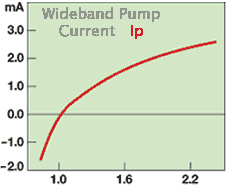
You can get wide band lambda sensors that give a progressive read out of the air fuel ratio, but most people and cars just use the standard on/off style lambda sensor. A rare few cars like a lean burn version of honda's vtec used a wide band sensor, the sensors are made by a company by the name of NTK. They are a 5-wire o2 sensor. They can be expensive, ranging from about $300 for a honda one if your lucky, to insane prices over $1000.
Some of the EFI links posted cover alot of this stuff, I will put them in here if they aren't already.
Baja Wes ·
Found the old post...
modulus wrote:There has been a lot of discussion of EFI and EMS on the forum lately.
tassupervee wrote:This post will be a bit long so apologies in advance.
Hmm some good and interesting things in this thread so far.
Anyway, here goes:
The Delco option is ok and there are a myriad of 2 litre EFI camiras wrecked but i think you have discovered that by the time you add it all up the cost is prohibitive to set up one of those old systems. They have very limited "closed loop" opperation and therefore are not able to "self tune" unlike most latter day systems.
The actual issue of re-mapping them (delcos) is a pain and cannot be done easily "on the fly"
WRONG
Your opinion/info is almost a decade out of date.
Delcos programmed with the Kalmaker software is the most popular system on Australian roads today. There are literally thousands of Commodores and other cars transplanted with delcos/kalmaker. The Delco used in Commodores has reasonably sophisticated ST and LT 'learn' strategies etc etc (from 1994) and all since 1988 have used a closed-loop system. Okay, not as smart as the latest stuff, but entirely adequate for a VW's needs!
tassupervee ·
Oh yes dude absolutely agreed, Delco entirely adequate and tuneable for sure but when talking a simple and easy to use system that a dude can set up himself with at least some mechanical nous and a handpeice armed with exhaust gas oxygen readings as this guys wants to they (delco and the like) are not really that user friendly. When you want to make a minor mixture change at a particular RPM or load point, with say, a Microtech, Wolf, EMS you just pull out the handpeice and press some buttons and refer to your EGO's. Too easy!
I'm not sure that the Delcos you mention are quite so user friendly.
Most of my post was concerning affordable, simple to use and set up aftermarket stuff that nearly any dude with some intelligence and patience can fit and configure himself.
I make pretty much no mention of OEM factory stuff and i will not go there.
Actually, MAF (Mass Air Flow). But who's bothering.
Very few, if any, aftermarket EFI ECU manufacturers bother with MAF sensors.
Particularly the vane types that are very difficult to calibrate to a particular application, suffer from vibration damage.
Another forum I subscribe to for Pulsar turbos (vane type MAF), thi issue of resistance from the vane has been well discussed and to that end the MAF was actually flow tested with surprisingly good results. At first glance they appear rather restrictive but in practise are not as bad as they appear.
The MAP (Manifold Absolute Pressure) sensing is not peculiar to or any more aimed at turbo men than atmo men and works just as well in either application.
Wild fluctuations in manifold pressure are only an issue when using extreme camshaft overlaps, single cylinder map sensing or on rotors where very low and/or pulsing idling manifold pressures are common.
The simple and effective workaround here is to configure the ECU to run off the variable TPS untill manifold vacuums are sufficient to do the job correctly.
This is a usual parameter to change in most aftermarket ECU's.
Speaking of TPS's I have the benefit with my Microtech of having the option of switching to idle maps and fuel cuts on over run and such and i can tell you that the results you get are hardly worth crowing about unless popping in the zorst bothers you. This can be, to a certain extent, tuned out as well. I was unable to note any real decrease in fuel consumption or temp variations using over run fuel cut. In practise the idle maps are close enough to the running maps as to not really worry about.
I do advise the use of variable resistance TPS tho. Very worthwhile gains.
Someone mentiond that the temp sensor fitted to the sump reading oil temp.
This tends to result in excessively rich warmup running untill the oil heats to preset temps. Also, the engine can be for all intents and purposes stone cold but the oil can have significant heat there which will result in shitty cold running untill the rest of the engine "catches up" in heat with the oil. The ECU is fooled into thinking the engine is hotter than it actually is.
It is of fairly minor importance many dudes can just drive around but why bother with EFI if many of the advantages, such as smooth and drama free warmup running and ability to cope easily with wild variations in engine and ambient temps and such are not fully exploited.
The oil doesn't necessarily heat or cool at the same rate the rest of the engines does so, altho it can be compensated for, oil temp does not ideally represent the running temp of the engine during warmup thats all.
Wes
I dont know where you get your info on EGO sensors but narrow band EGO sensors are nowhere "near a switch"???
Just the same as a wide band EGO ,they are a simple and virtually immediate proportional voltage generator device dependant on heat and the oxygen content in the exhaust, hence Exhaust Gas Oxygen Sensor and the Jaycar, or for that matter, any low voltage expanded scale volt meter, even an expanded scale multimeter, works just fine that full scales between Ov & 1 (point something) volts will serve the pupose.
The main issue between wide and narrow band is the actual scale or width of signal (mixtures) they will actually accurately deal with.
This is often the issue with turbo applications demanding wide band sensors as narrow band EGO's often dont read successfully at lower (rich) readings, such as about 10.8 to 11 that really high po turbo setups often demand in an attempt to prevent grenading of these engines.
Both my FJ20DET and Pulsar E15 ET turbos run on EGO's of around 11.5 to 11.8 on heavy load and readings are pretty much the same when the things were dynoed using one of those tailpipe probes.
An atmo engine running those low EGO readings will be using waaayy much fuel and loosing power.
For an atmo dak dak, a simple 2 wire 65 dollar EGO sensor out of anything will work as well as the million dollar jobs you are talking about. You are after EGO's of around 12.5 to 13 for maximum performance and up to 15 on very light throttle cruise.
Speaking of which, 4 wire wide band EGO's start at around 200 dollars if you are prepared to hunt around.
Petroject will touch you up about 280 bucks retail for the same wide band item. You dont need to spend huge money even on a wide band EGO.
The issue of calibrating one of these is a doddle with a simple job of piggybacking one onto a later model EFI car EGO send when idling, fully warmed up in closed loop mode and simply setting the trimpot so the ocillations up and down the scale, matching the ocillations of fuel mixtures when running in closed loop run approximately in the middle of the led scale. The adjustment is fairly arbitrary and has little effect other than a fine trim.
These little guages are as fast reacting that any tailpipe probe when the EGO sensor is placed as close as possible to the ports. Unfortunately, this usually means in the extractor collectors but this is usually fine enough altho operation of the EGO is delayed considerably when cold if there is no preheater element.
That is why i reccommend fitting a 4 wire preheated EGO.
Not everyone has access to a portable tailpipe probe but everyone has access to a simple EGO sensor and display.
I use these simple strategies for tuning on both my turbo engines where any leanout issues results in nasty detonation with absolute confidence as well as many others do.
Have fun dudes
E
lugnuts ·
Im getting about 30% of all this technical twaddle AND LOVING IT,keep it going and remember BE NICE,😀
Baja Wes ·
MAF and VAF are basically the same thing, just a personal preference on what you call it. The meter actually measures air flow volumetrically, and then if you measure the air temp as well you can get the mass flow. So I think volume air flow is more correct. My workshop manual calls mine a VAF.
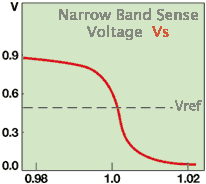
and a narrow band o2 sensor looks like this;
Trust me, the narrow band between lambda of 0.98 and 1.02 ain't much in the air fuel ratio scale. some are better than others but chances are you won't know which you have.
and a wide band one looks like this;
tassupervee ·
Yeah dude, whatever.
My EGO guage and the direct real time EGO reading on my Microtech hand peice pretty much agree with each other regardless of the quality of the device I have used.
The EGO sensor in use now is a known condition3 wire device with an external earth point added.
Yes there certainly are better quality ones than others but the original 1 wire, another 1 wire (possibly lead poisoned) and the current 3 wire job agree with each other sufficiently for me not to be concerned in the slightest.
You must agree that a turbo application will exploit any deficiencies in the setup usually in a glaring fashion and I have, nor anybody else i know that use 2 bob sensors have had any trouble at all.
Ya just gotta know the setups limitations!!! LOL
If care is taken with these thingoes then as good as a result can be gotten with just a little time and zero money burnt on dyno's
Typically a couple of hours @ (often) 100 bucks an hour.
L8tr dude
E
bigbruvabob ·
hey ross i would definateley pay the $500-00 and would want two of them as i am in the process of doing two different street beetles(one for moir one for girlfriend. )would you easily be able two set it up for different motors ie one for say a 1680 and one for 2ltr. four carbies and manifolds will cost me a small fortune and i think it will be easier to sort a single unit in each car. as they say twins are two much.
ratty 63 ·
Hi all,
This thread has been a little quite lately....
I have been off researching the mechanical side of things - mainly the fitting of the injectors.
In keeping with the idea of using commonly available parts to keep the cost down I looked at the endcastings from a genuine injected beetle. Now I have never seen the manifold end castings off a genuine system and I have just discovered that they look more like the Type 3 manifolds, with the pipe closest to the fan housing bent and merged with the other pipe. They are longer (toward the centre - if this makes sense), but may be able to be cut shorter.... not sure - I am waiting on some pics comming from the US - should be with me in around an hour or so...
Whilst I was looking at this, I also checked out the feasibility of having the standard twin port end castings modified to suit. It would require a block to be welded to the casting, then machined to accept the injectors and some sort of clamping system - perhaps similar to the type 3 system. My friend, who is an aluminium fabricator, is going to have a go at setting some end castings up for me, just as an experiment. He feels that it won't be a problem... I will know in about a week or so. Does anyone see any problems?
I had a bit of a search of the forum and found the post mentioned earlier relating to the mexican injection - interesting. Looks like it would do the job...
Whilst I am here, does anyone know if Commodore injectors will fit in an injected type 3 manifold? Just thought that these injectors would be easier to find than, say, Kombi or Type 3 injectors.
Stay tuned....
R
PS: pics below for those who are not sure what I'm talking about...as far as I can see, would have to re-create the injector mounting block that you can see on the type three manifold (on the left) in the twin port Beetle manifold (on the right).
ratty 63 ·
Ok, I have to admit - I joined another forum! This forum is discussing only fuel injection - everything from the genuine stuff to the latest and greatest. Of course, lost of differing opinions but they all agreed with one thing:
Don't bother trying to track down a set of genuine manifold ends from a late '70's bug. Yeah, the are available without any problems, however they are really small (read: restrictive). It was discovered by one of the guys I was discussing this option with, that if you trim down the standard (carb) manifold it will fit the genuine FI manifold ends (the ends are much longer than the standard twin port ends).
One of the guys who responded to my posts has done some testing of the genuine intake manifold ends vs modified twin port ends and, although he made a few other mods to the engine, produced a 19% increase in Hp.:o Now he changed the rockers from standard to 1:1.4 ratio rockers and changed air filters to be less restrictive, and the whole lot was coupled to an old k-jetronic system (no throttle body sensor etc). Still an 19% increase is huge! I can post the site URL if anyone is interested. (He actually ran the test starting with a set of dual Kadrons and ending with the K-jetronic FI system using cast manifold ends - increasing the engines overall output by a massive 80%!!!!!:o:o:o Very interesting read.)
OK, so I am absoloutly sold on the idea of EFI, now all I have to do is make a decision relating to the brand and type of Computer and away we go......
(Who am I kidding, it's not going to be that easy, but you have to start somewhere!:P )
Another question, I have noticed that the EFI systems come in both sequential injector fire and batch fire. Most of the basic system seam to be batch fired. What advantages are there to upgrading t sequential firing? Is it worth paying the extra for a street/off-road car? I know that the genuine systems fitted to the air cooled VW's is batch fired and (when set up and maintained correctly) works well.
Also, there is some discussion regarding the location of the engine temp sender. Some say that the oil temp is a good indication, whilst others say that the temp sender should be fitted to the head. I have the option to do either, I have an oil temp sender in the case already and the heads have the threaded fitting to suit a sender. I personally feel that the heads would respond faster (in temprature change) to changes in load - perhaps even too fast? Is this a problem? Some people have even said that it makes no real difference. What are your thoughts?
R
tassupervee ·
Dude
Ultimately, the system will run well enough without any temp senders fitted at all as was originally the case with my Microtech fitted to the FJ20det Nissan. Most aftermarket ecu's will run happily enough on MAP sense alone, Throttle position sensors are not necessary either but are desireable, particularly if they are of the resistive type.
The issue is mostly with warmup and perhaps red hot running where you may like to trim mixtures a bit to compensate for lost air density.
The car will simply be more difficult to start from dead cold as there is no accellerator pump to squirt in raw fuel to help cold start when the engine is not running, only cranking enrichment, and will run like a carby car without a choke untill it warms up enough.
This is sort of defeating the purpose of EFI really.
The temp sense in the oil is a bit dodgey as the ECU will consider the engine cold untill the oil warms unless you set the fuel points at very low temps and this is a much slower warming process than head temp.
It will result in rather rich running and excessive fuel consumption untill the oil reaches the temp points set in the ECU fuel map to compensate for cold running.
You could concievably have the engine completely hot but the oil just warm or have the oil warm but the rest of the engine stone cold and it will run like a pig for a while.
Head temp does not lie to the ECU nearly as much. If anything, the head temp may climb a bit too fast but this would be a much better bet than relying on relatively slow reacting oil temp. Whats important is to keep the sensor as far away from the exhaust port as practical. This area of the head will get hottest, fastest, fooling the ECU into believeing the engine is warmer than it really is.
The temp probe in most aftermarket EFI systems usually goes into the water just underneath the thermostat and uses water temp to indicate to the ECU what the engine is actually doing.
Some systems use a fast reacting temp. sensor in the inlet to compensate for air density.
These sensors have holes machined into the sensor end to expose the thermistor to direct airflow and are used to trim mixtures for density changes proportional to temp changes.
This type of sensor is not really necessary again, but desireable nonetheless, particularly on turbo applications where air density changes are frequent and usually gross.
Oil is not really a good indicator of operating temp of the engine.
There you go dude.
E
1303Steve ·
tassupervee wrote:The temp sense in the oil is a bit dodgey as the ECU will consider the engine cold untill the oil warms unless you set the fuel points at very low temps and this is a much slower warming process than head temp.
E
Hi
Were all here to learn, have you ever used a coolant temp sensor in oil in this situation? I have personal experience with this with an Autronic SMC in Leigh’s turbo bug, that’s why I suggested it. He was using the factory Kombi EFI head temp sender, this did not interface with the Autronic very well. Most aftermarket ECUs can be setup to run a coolant temp sensor in this manner, the Camira sender that the Autronic uses will read from ambient temperatures and up, Leigh has all his enrichment over buy about 70 Celsius and does not experience any of the faults that you suggested might occur. I think that if you could get an aftermarket ECU to run using head temp it would experience to wide a fluctuation, the oil temp on the other hand would more closely follow the characteristics of coolant, albeit at a lower temperature and after all aren’t these aftermarket ECUs are all setup to cater for water-cooled motors, perhaps factory aircooled ECUs could use head temp as an input but we are not talking about factory aircooled ECUs are we.
1302Steve
ratty 63 ·
I have just spoken to a number of Ppl about a number of topics whilst I was out and about today.
Firstly, almost everyone I spoke to about the temp sender location, and that had any knowledge of VW's feel that the sender should be in the oil. They all feel that the oil would follow the charastics of the coolant of a water cooled motor, albeit a little slower to react (perhaps). As most of the Fuel injection computers can be set to 'react' at different tempratures, this shouldn't be a problem... interestingly, one of the emails I have recieved from one of the EFI system manufacturers suggested that I should use a head temp sensor...hmmm.
The other thing that came up is more than likely due to my limited knowledge (although it is improving with every day and every post!). I was of the understanding that the Oxygen sensor (in the exhaust) 'told' the computer if the engine is running too rich or too lean. Someone I spoke to this morning (a mechanic) an he tells me that the oxygen sensor only monitors the condition of the catalytic converter and that it would not be required in my system (no cat!). He tells me that another sensor is used to inform the computer of fuel mixture. He couldn't recall what this sensor was called (doesn't work on EFI all that much), but did try to show me a diagram in a workshop manual of the sensor loaction - and was unable to. Now, I am about to go back and re-read the posts so far, but can anyone confirm if this is correct? What function does the Oxygen sensor have, and if there is another sensor, what is it called?
Sorry if this has already been answered, but I am now really confused🙁
R
tassupervee ·
He was using the factory Kombi EFI head temp sender, this did not interface with the Autronic very well.
Is the Kombi sensor a thermocouple or a thermistor?
Is it placed close to the exhaust outlet?
the oil temp on the other hand would more closely follow the characteristics of coolant
Does it?
Well, the rationale for not using oil temp as an indicator is here:
The warmup issue with a cold engine are the usually result of fuel condensation in the inlets and ports, by using CHT, the ecu can fuel according to the temps that directly influence cold running issues. Altho oil temps are related to engine temps to a certain extent, they have little influence on the temps of the inlet and port areas so are not indicative of what is actually going on with the engine warmup wise.
Water is circulated around the combustion chambers and directly adjacent to exhaust ports in a water cooled engine and remove a lot of heat away from these local areas, which after circulation, applies heat to cold areas inside the manifold where fuel condensation and seperation occur, causing ratty running when cold. Witness the ratty cold running and slow warmup of a Veedub in winter when the heat riser is disconnected off the bottom of a stock inlet manifold. They will run fine on open throttles but tend to run crappy at low revs and throttle openings. I can chase idle mixtures all day with the F-Vee as we have the manifold stripped of the heat riser pipe and aluminium cuff holding it.
So, The oil can be cold but the engine at operating temp (for the purposes of cold running issues) so with the temp sense in the oil the ecu will continue to overfuel resulting in the very least of lesser fuel economy and reduced power.
The engine can be cold but the oil can still be quite warm resulting in hesitation and rougher running fotr a bit of time 'till things stabilise.
In an aircooled sense, the better strategy is to monitor head temp for the simple purposes of warmup running which is the area the temp sensor has the most influence on.
I never said oil temp will not work, I said it is not the best choice.
Leigh has all his enrichment over buy about 70 Celsius
Yep fair enough, this is the case with my FJ20DET. I have tried loosing warmup enrichment at lower temps than this in an attempt to improve economy and was rewarded with hesitation and stalling/rough running out on idle with the idle and load maps showing good EGO's at normal operating temps. My warmup enrichment cut out set points are up into mid 70's Deg C.
Ok then, using my F-Vee as an example, if I race in cooler weather at Symmons Plains my oil temp will not get over 65 degrees C. but my CHT (undersparkplug) is well up at its maximum (300+ odd deg F)
Using oil temp as a reference, my engine would still be running on cold start enrichment at the end of the race even tho it has completed 7 laps at pretty much wide open throttle and was, for all intents and purposes, fully warmed up after the roll up lap as far as warmup enrichment was concerned.
Simply the engine is red hot but the oil is cool so the ECU thinks the actual engine is cool and enriches it based on what it sees, which is not correct.
This will result in very low EGO readings, increased fuel consumption and significant loss of horsepower. Sure, it will run smooth enough but if you have the faiclities to trim and acheive absolutely best running over a wide range of conditions then why not exploit them? Otherwise a reasonable el-cheapo twin carb setup will work almost as well and be a whole lot less money, time and bother.
I think that if you could get an aftermarket ECU to run using head temp it would experience to wide a fluctuation
Not really, the head casting is a fair chunk of aluminium and temp flutuatios would be relatively slow, particularly on warmup where the issue of a temp sensor is relevent. Above the readings necessary to invoke cold enrichment, temp flutuations are pretty much irrelevent.
Leigh has all his enrichment over buy about 70 Celsius and does not experience any of the faults that you suggested might occur.
You guys have obviously gotten the setup pretty close in your turbo arrangement so the overenrichment during "oil" warmup is not so obvious as rough running. What are your EGO readings during the oil warmup phase?
I dont know if ECU makers usually allow for CHT as a temp reference in run of the mill aftermarket ECU's without actually checking it out on both my systems but since there are a plethora of systems suitable for air-cooled bikes available (EG: Wolf EMS) It could surely only be a minor software revision.
L8tr
E
1303Steve ·
Hi
Is the Kombi sensor a thermocouple or a thermistor?
Not sure.
Is it placed close to the exhaust outlet?
It was located in an existing boss in the head, the factory EFI Kombi sender was used in place of a tinware screw near the inlet manifold.
the oil temp on the other hand would more closely follow the characteristics of coolant Does it?
In Leigh’s case he used an output from the Autronic ECU to operate a cooling fan on his oil cooler, the oil cooler is located above the trans with no direct airflow so it does warm fairly quickly.
As I mentioned in my previous post, aftermarket ECUs are not made to suit a 60 odd year old aircooled motor, so I think to make things simple the coolant sender in the oil is a viable option as long as you can adjust your ECUs cold enrichment down to meet the lower temperature that the oil runs at. I'm not sure what an aftermarket ECU would make of your example of CHT of 300+ deg F, but the ECU could make sense of your oil temp of 65 deg C, say in your Vees case you make your normal oil (coolant) operating temperature at about 55 C, the heads etc should be up to operating temperature so the need for enrichment would have passed. It must be a bit harder in Tassie where it gets a bit cooler.
I have driven cars with CHT gauges and have noticed a wide range of temperatures depending on driving conditions, that is what I based my comment on regarding the use of a CHT sender for this purpose.
You guys have obviously gotten the setup pretty close in your turbo arrangement so the over enrichment during "oil" warmup is not so obvious as rough running. What are your EGO readings during the oil warmup phase?
Leigh and I have both had to fool around to get the cold start enrichment right, after the cars were dynode, we don’t have an EGO so I cant tell you our reading
I don’t know if ECU makers usually allow for CHT as a temp reference in run of the mill aftermarket ECU's without actually checking it out on both my systems but since there are a plethora of systems suitable for air-cooled bikes available (EG: Wolf EMS) It could surely only be a minor software revision.
interesting, could make all of this debate irrelevant.
Ben, Leigh was running quads (2 duals) with Berg linkage and the drop in power was noticed as the fan housing distorted with temperature variations, affecting sync and hp readings.
Cheap ECUs lose their appeal when you have to pay for lots of dyno time.
The Autronic has an Autotune facility, below is a sales blurb on it.
==========================================
Autotune ™ Feature
The Autotune ™ features available for the SMC and SM2 model ECU's.
Old models can be upgraded with a chip change and new software.
The Autotune ™ will tune the engine with no input from the operator. The closed loop air fuel ratio table is used as the target air fuel ratio table for the Autotune software. This table is setup with the required air fuel ratios at various RPM and Load points.
An Autronic exhaust gas analyser or any other analyser that provides a 0 to 1 volt corrected output, is connected to the ECU O2 I/P, this is used as the actual air fuel ratio input. As the engine is run through its various RPM and Load points the software will adjust the volumetric efficiency numbers in the main fuel table to achieve the target air fuel ratio.
At no time do you need to touch the keyboard on the Laptop.
After the tuning is complete the analyser and 02 sensor is longer need. At any time after tuning is finished the values in the target closed loop table can be changed, and the engine will automatically run the new air fuel ratio, providing you do not make a change to the volumetric efficiency of the engine, e.g. fit a different camshaft, modify cylinder head etc...
If the engine is modified so the volumetric efficiency changes, then the analyser and Autotune ™ software will be required again to re-tune the engine.
The Autotune ™ software is much faster then a good operator. It is not possible to manually tune as quick as the Autotune ™. A typical engine will take less than 20 minutes to fully map on an engine dyno.
The accuracy of the Autotune ™ can be setup in the software from 0.5% to 5.0% accuracy. The default value is 2% accuracy; this is generally a lot more accuracy then most tuners manual tune engines.
Overview
Autronic Autotune ™ software provides rapid hands-free tuning of Engine Air/Fuel mixtures. This automated operation frees the engine tuner, allowing total concentration on safe engine/dyno operation. On road tuning of motor vehicles is even possible.
This software uses a complex combination of math, including statistics, trigonometry and fuzzy logic to intelligently adjust the fuel delivery tables. Initial tuning is rapid usually occurring within 1 second. High precision can be achieved by allowing the Autotune ™ to operate for an extended time at each engine operating point. The operator has control over the balance between tuning speed and accuracy. Accuracy is ultimately limited by the accuracy of the attached Air/Fuel ratio measurement equipment.
The program provides visual indication of the tune status. Automatic and manual storage of tune status allows the user to monitor the tuning progress even if undertaken in several sessions. Tuning usually proceeds 2 to 5 times faster than possible by manual means. Fuel savings of as much at 90% have been reported. The considerable savings in engine life are obvious.
This program also has elaborate diagnostics facilities and allows simultaneous operation of the ECU internal data logger and external P.C data logging.
Versions are now available that have live engine operating data graphs while tuning, and a live 3D graphical presentation of the tuning process.
tassupervee ·
Id love to have a play with the autotune Autronic. A mate of mine has one fitted to his turbo ET Pulsar and is really pleased, as might well he be given the high cost of those Autronic systems.
EMS have a new autotune system now and without actually checking, I suspect all the others will follow suit very soon and this feature should become the norm rather than the exception in short time.
It would be economic suicide not to except on the very basic, 2 bob bottom line budget system.
I have my Microtech MT8 fittet to a Nissan FJ20DET in a Ford econovan.
When I first got the van there was no temp sense and the engine was running on the generic 4 cyl turbo map that came with the Microtech.
The thing ran ok but obviously was as rich as buggery everywhere and used copious wads of fuel.
I have inproved the fuel consumption from about 18 MPG to around 24 MPG and improved throttle response and all around driveability including cold start and warmup woithout EVER having it on the dyno.
I simply fitted a good EGO sensor just after the turbo and the whole thing has been trimmed on the road using the ego readings.
Cruising egos hover around 13.8 to 14.5 Low power and low boost ego's around 2.8 to 13.5 and WOT and high boost ego's around 12.5 to 12.8.
The high boost ego's are a little lean but I have compensated here with about 6 degrees progressive boost igntion retard beginning at 4 psi and finally at 8 psi to ward off detonation but keep more advance and reasonable economy off boost.
All this was done without the "benefit" of hideously expensive dyno time. Often over a hundred bucks an hour.
My point is that you cannot underestimate the value of a good quality EGO sensor and guage on the dash as far as tuning is concerned.
After all, thats what the dyno guys stuck up the tailpipe anyway!
Down here in southern Tas, I do have the benefit of lots of long and constant hills to exploit as a method of "strapping" the engine but the same can be done with throttle braking in, perhaps third gear somewhere quiet.
EGO reaction times are almost instant when the EGO is mounted right up near the engine so adjustments can be made very quickly.
It is handy to have another dude in the car to help keep the car straight as maintaining engine RPM, vacuum or boost readings, brakes and monitoring ego's and adjusting set points can be a bit dodgey all at the same time 😀
Believe me , I have run all over the road doing this risky practise but the results I have gotten from my system are well worth the...ahhh,... bother.
Your right, CHT readinmgs do flutuate widely but for the purposes of warmup enrichment, the temps there will only be relevent actually during warmup and what happens after that is not considered by the ECU.
It is highly unlikely that the lower temp readings relevent to warmup would be seen under ordinary driving conditions.
Anyway, there you go dude.
L8tr
E
ratty 63 ·
Ok, I think I may have worked out why CB Performance have designed their endcastings with the injectors facing straight down. It could be that due to a lack of clearance in the engine bay of a bug, the injectors, if mounted in the same position as a type 3, would have to be removed from the engine to enable the engine to be removed from the car. With the injectors fitted in an upright position, they should be able to be left attached when the engine is removed. Now I haven't tried this theory yet, as I am waiting for my modified end casting to be finsihed - I am having them machined to match the type three fitting, so I hope that they will fit, even if they have to be fitted after the engine is fitted to the car...
Has anyone tried this before? Do they fit OK? Should be OK for me, its all going in a Baja, but owners of standard Bugs that are considering doing the same mod may be intereseted to know...
Ross
ratty 63 ·
Hi all,
During the weekend I had the chance to drive an early T3 notch belonging to one of my fellow club members, which has just been fitted with a 2.1 litre engine. Amongst other modifications (IRS conversion, 6 to 12 volt upgrade, etc) this vehicle was fitted with a custom fuel injection system (ie: not a factory system).
This system consisted of a throttle body from an EA Falcon, injectors from a VL Commodore, fuel pump from an FI Kombi, manifold from a FI type three and a Haltec (I think) 'screwdriver tune' computer.
This car has been totally tuned by ear (no Dyno time) and as yet has not had the cold enrichment set up, so it runs a little rough whilst it comes up to temprature... but when it is up to temprature it is a real experience to drive.
Now I realise that it is not a small engine, and it is fitted with a lightened flywheel (that caught me out a couple of times!) but the power output was incredible - but more incredible was the ability of the engine to pull from idle in any gear smoothly. Especially good when you realise that this car is running a 4.16:1 diff ratio on an otherwise stock standard gearbox. Unfortunatly this car is only fitted with a speedo (no other gauges) so I don't know what sort of revs I was at when I changed from 2nd to 3rd, but it was below where I normally change when accelerating into traffic in my '63 bug (40hp) - as I let the clutch out in third I had a quick look at the speedo and it was showing 85km/h!!! YIKES! :o (60 zone too!)
The best part of this whole set-up was the incredible smoothness of the power (once warmed-up). It makes it the sort of car you could drive really hard yourself, and then hand the keys to your Mum and know that it will behave itself!
I think that this was one of those inspiring moments....
R
PS: just spoke to my friend who is creating the injector mounts in my twin port end castings - he has finished one side and is most impressed with how it turned out - should have it back by the end of the week - my Brother has donated me a worn, but running 1600 TP engine which I am planning on using as a test bed for the injection. Now all I have t do is get my floorpan fitted up and the engine mounted and .....
R
tassupervee ·
EFI works well dont it!!:thumb
Even considering that particular system is a bit "agricultural" (all due respect to the dudes that set it up) the gains to be had cannot be underestimated as you have glaringly discovered.
Your multi-point system will knock the socks off you when you get it set up and you will wonder why on earth you would ever think about setting up twin carbies no matter what the brand or reputation.
There is nothing like doing a fuelling or ignition advance trim sitting at the lights!
Keep it happening dude and good luck!
L8tr
E
1303Steve ·
Hi
When I went from IDAs to injection the thing I noticed most was the smoothness at all times, you have a lot confidence that the car will drive without a flatspot through an intersection without you needing to engage the clutch again to get out of the way of the truck bearing down you.
1302Steve
Jeza ·
Ratty
When you get your twinport castings/ manifolds back can you post a pic or 5, I'd be really keen to see what you did in the end, and how you get on with the clearance in the engine bay.
S1fter got his panel beater to alter the bodywork either side of the engine to fit his stuff in nicely.
Cheers
Jeremy
ratty 63 ·
No Worries! 😀 Be happy to - I am actually in the process of making some fairly extensive changes to my web site to enable me to post a heap of step by step pics as the build-up continues. I'll let you know when it is online.
The need to change the bodywork to make it all fit was what I was worried about🙁. For my car, being a Baja, some mods to the bodywork will not be an issue, but I would prefer to build a system that could be put into any vehicle without mods...perhaps I will have to re-design the injector mounts on the end castings in the future...I will hopefully know tomorrow as I am hoping that the endcastings will be returned to me tonight😀. I will post pics ASAP
Thanks for those links Jeza - I notice from S1fters thread that he is fitting a Type IV into a bug (with injection) - these engines are a bit wider than the type 1 engine that I am going to use so perhaps I will not have to do too much in the way of body mods... Damn, I hope my manifold is ready for me to pick up this arvo...
Just as an aside - my Brother has just fitted his Baja with a 2.1l Porsche fan cooled type IV - features lots of mods (hydralic (?sp) lifters, massive cam duration, special heads, etc) His plan is to fuel inject this one in the future, but at the moment it is just running the standard carbs so that he can take part in the beach run on Fraser Island between Xmas and New Year. Looks mad! I will get some pics of it up on my site as soon as I can catch up with him...
R
ratty 63 ·
Hi all,
Been a bit quiet here for a while but things are still happening, albeit slowly.
I havn't recieved my manifold back yet - my friend who was doing it went to Tasmania for Christmas and will be back next week, hopefully then....
I have spoken to a number of ppl about all sorts of area of EFI and have a number of interesting bits of info...
Temp sender for EFI: have come to the decision that it should be fitted to the heads - it was explained to me that the only reason that the watercooled vehicles use a water temp reading is because you cant get any closer to the head to get combustion temp, but we can - makes sense to me... only question now is which sensor to use - any ideas? It was suggested that I should purchase a sensor from an EFI Harly Davidson or a Porsche (can you say $$$$:o ). Someone else suggested that I use the genuine VW part from either a FI type 3 or Kombi (with FI type IV engine) but from what I have read, I can't be sure that the sensor will work for the over-temp situation... does anyone know? Even better, has anyone got a graph of the sensors resistance and different temp readings?
I have finally spoken with the owner of the Hemidore (Commodore with an EFI Hemi motor in it :o ), he is running the ACDelco computer with the Kalmaker software and thinks that it will easily handle the VW engine, however he suggested sticking with a dissy to distribute the spark for ease of use - apparently the only 4 cylinder coilpacks that work with the Delco system (for distributorless ignition) have to be imported from the US - not "off the shelf" enough for me...
OK, thats it for now, I will put the pics of the manifold up as soon as I have it in my hands.
R
tassupervee ·
Ratty
You dont need quad coil packs to dizzy spark without a dizzy!
Depending on how many coil trigger outputs on the ECU you plan to use.
One strategy is, if your ecu has 4 trigger outputs, and you you want to get really pedantic and impress your friends is to use 4 bosch 008 triggers firing 4 seperate coils.
Not cost effective and pretty much wank. 4 coils at 80 odd bucks each and four 008 triggers at about the same (I think)
The best option to do away with a distributor distributing the spark is to use 2 trigger outputs, 2 Bosch 008 triggers and a pair of twin tower coils.
This arrangement fires 2 plugs at the same time.
Every 4 cylinder motorcycle ever made employs this method and should be the easiest and most cost effective way.
The dizzy is relegated to nothing more that a housing for the crank angle sensor and injection/ignition trigger. It requires no advance mechanism as this is handled by the ECU so any old fixed dizzy with no advance/retard mechanism will be fine.
You can do away with the dizzy altogether if you wish to run a pair of hall effect triggers that are timed directly off the crank.
hence "crank fired"
This is the gun arrangement but may require a bit of fabrication for the timing disks required and some bracketry for the hall effect sensors.
Most OEM ecu's tend to be triggered by an optical system that will have to be shoehorned into a dizzy.
To my knowledge most aftermarket ECU's have the option of being triggered by optical, hall effect and reluctor (magnetic proximity) timing sensors.
As far as temp sensors are concerned, apart from some mazda rotor and i think the odd yank GM items (cant comment on kraut items), coolant and air temp sensors are a generic item and you need to find one that you can attach to your head.
Often the sensors are attached to one of the tinware attaching holes near the inlet port and that will need to be drilled out to accept the sensor you will need to use.
AFAIK, they do come in a variety of configurations and I am sure thermistors come in a 1/8"BSP threaded fitting amongst many others.
I would make a call to a crowd like EMS, Microtech, Wolfe, Haltech or the like and ask what sensor they reccommend.
Even anything drilled and tapped into the rocker box will work well enough.
It just needs to be as away as possible from the exhaust ports so zorst heat has as little influence on it as possible.
The "coolant" sensor is primarily used for cold running enrichment and the system will run happily enough without it apart from running a bit shitty when cold if the EGO's are really good on idle and slow run.
Like without the choke and heat risers disconnected on a single carb now!
Your injectors will be pointing directly into the inlet port now and cold running will be far less influenced by cold temps and associated fuel condensation than when running with a single carb and all that tubing for the fuel to condense out into when cold.
Twin carb krauts will allways run cleaner when cold with less choke that a single carb engine for that reason.
Nice short little inlets facing downwards for the fuel to travel thru and little surface area for the fuel to condense on.
You could even bodge it well enough by bracketing the sensor to the head.
So long as it is influenced by heat from the head, the ECU can be tuned around the temps it is actually seeing rather than exactly what it should know.
L8tr dude
E
ratty 63 ·
The pic attached below show where (I am told) the factory temp sender is fitted (in the threaded hole where my finger is) - do you feel that this is too close to the exhaust port?
Did I you understand correctly, that I could use a temp sender in this location, such as the ones from a coolant temp gauge to 'talk' to the ECU? Would they have a sufficient temp range?
Thanks
R
tassupervee ·
Ummm as far as position is concerned there is no reason why that wont work there altho closer to the inlet would be a better option.
Naw, for whatever reason you cant use a usual coolant temp guage sensor.
Temp guage senders seem to come in a variety of outputs for different make guages and I have never bothered to find out what is different as far as their actual heat sensing internals are concerned.
Nearly all of these types are grounded to the engine where EFI temp sensors are usually above earth.
It must be a temp. sensor for EFI.
It will have one of those square, 2 pin connectors on it same as on top of an injector.
Apart from some yank GM and some Mazda rotor EFI temp sensors, the rest are all the same so whatever you can find to fit there will do.
Even if you have to make a screw-in brass or aluuminium adaptor to accept a generic sensor this will work just fine in the location you show.
Once again, at bare bones level, the temp sensor in an EFI system is not a lot more than something to tell the ECU when the car is cold.
As outlined by someone else, their system runs fine without it apart from the bit crappy cold running.
However, for a small amount of effort in adapting the temp sensor, you can have a engine that will run happily at -5 Deg with a hard frost and on to red hot on a 35 Deg day without any bobbles or snorts in between!
Why not is what I say!
L8tr dude
E
bigbruvabob ·
www.injectionperfection.com/ has a complete set up using weber style throtlebodies fo four cylinders ford injectors and a microtech ecu and tuning tools. they have a full parts and price list and other basic information. My mate is into fast rotaries (his is turbo rx3,sub 11s) and reckons this stuff is of the best , and price reflects that 2500-00 complete setup including handpiece etc. notice that ealier on on this thread some one said microtech ecu second hand for 200. Would this require re mapping still. excuse my ignorance am complete novice:jesus
tassupervee ·
Remapping?
Yes more than likely but all Microtech ECU's "should" have a base map in there that was loaded into it when the ECU was first ordered.
Just depends on what the original car was.
The ECU's can be sent back to Dom at Microtech and have appropriate maps loaded that will start, run and get around ok in the interim, as is the case with all ECU's
However some broad tuning can be done with the aid of some quiet road, a good mate and a bit of time.
That price is a bit high unless that includes installation and tuning. Still compared with a pair of new Webers, manifolds, linkages, filters and all the other necessary hardware needed to get up and going, not to mention dyno time, its probably not so scary!
The hardware you mention is really nicely made stuff tho.
Probably aimed as a really high end performance job.
Those installations do look sensational tho and make the basis for a really hi-po setup in the future such as turbo-ing or just a sweet running, mad looking road weopon!
L8tr
E
ratty 63 ·
Hi all,
Just got my manifold back from my friend who modified it to accept injectors. Very happy with the result too. My only concern at the moment is if it will clear the sides of the engine bay in a standard bug - it will be close.... I have a test engine arriving tomorrow (a running, but tired 1600) so I will bolt it up to that and will do a dummy test fit - I will know more by tomorrow afternoon. I have posted some small pics here and some larger versions of the same pics on my website.
Tassupervee, Thanks for that info. I am planning on purchasing the necessary parts to do this converstion in the next couple of weeks, so no doubt I will have a heap of other questions...
bigbruvabob, $2500 seems like a lot of $$$ to spend to do this, whilst I haven't completely added up what this will cost me to do, I am looking at $1100 for the ECU and software to tune it using a laptop, then I have to buy the FI parts (injectors, throttle body, sensors, pumps, etc) which I will get second hand whereever possible to help save money. Even with all this, I can't see it costing anywhere near that amount. Is this to fit to your type IV that you have in the pipeline? If so, you could probably use some of the factory Kombi injection stuff (modified manifolds, injectors, etc). This is what my bro is planning on doing with his Baja.
R
tassupervee ·
heya ratty.
Those goodies are looking good.
What type of injectors are they made for? they look like hosetail types retained by the fuel rail.
What CC are the injectors?
Smaller the better!
L8tr dude
E
MickH ·
$2500 seems to be a reasonable price for an "bolt on system". I have been quoted up to $4500 depending on what computer I choose to use.....I have been following this post with some intrest from the beginning and I bet you can't wait to get yours up and running. At the moment I'm going to buy a CB performance ultra system without their computer as it is a crap idea. I will hopefully end up with either a Microtech or Wolfe computer as the Motec which I have been given is a lot of overkill. I have not decided wheather I will run batch or sequential injection as yet cause I couldn't be bothered thinking about it. The system all up including ecu (if I go Microtech with the hand controller) and ALL components (fuel pump/rails/injectors/sensors etc. etc.) will come in at $2600 Aussie $$$. I could do this a lot cheeper by using the ECU that I already have and drilling and tapping the boss in the Kadron manifolds and using the injectors from my old Kombi system. I couldn't be bothered and I just don't have the time. I will save them for another project!!! (wife belts me across the head) It all depends on how many $$ you want to spend. Your goal is to get a good system for as little $$ as possible and you are definetely going about it the right way!! Eagerly await your systems completion!!!! Good luck!!!!:bounce
Jeza ·
Ratty
Looking good :thumb
I second what Tassupervee asks.....ie what style injectors and what size your thinking?
Using those injector size charts that are floating around the web, I've never come up with figures that make sense- ie I can't find any injectors small enough- I guess I haven't considered any motorcycle ones though......
I'm also curious to find out where you got your bosses?
Let us know how things fit in the engine bay.
Keep up the great work- it's something I've been wanting to do for ages- maybe I'll at it look again when the cars road worthy!
Cheers
Jeremy
ratty 63 ·
OK, I'm going to try to answer all your questions from memory as this reply system doesn't show your replies when the thread gets long, so here we go...
The injectors shown are standard type III injectors, borrowed from my brothers workshop. I am told that the injectors from a similar sized engine (ie approx 1.8 - 2.0l) will work fine - so I am planning on using the injectors from a 2.0l Camira motor (dead Camiras are easy to find in the wreckers, so availability is not a problem). Due to this information I have not looked any further into the injector sizing issue, is there something I have missed?
The injector bosses were made from scratch by my friend, I feel that they will require some further minor modification before I am going to be 100% happy with them, however they are a fantastic start.
Getting the engine in and out of the engine bay with the modified manifold looks like it will be a drama, however some simple redesigning of the mounting block should get around this problem. I have just had a closer look at the depth of the injectors (into the manifold) and I feel that they will have to be recessed further as the injectors don't appear to be close enough to the inside of the manifold - I will have to check the type III manifold and see how close the factory made them fit...
OK, I can hear my experimental engine arriving (my brother just left two 31X10.5 size skid marks up my driveway trying to reverse the trailer up to the garage 🙁 ), so I will know more in a moment.
Back soon,
R
tassupervee ·
Ratty
Good stuff dude.
i am looking forward to seeing how your project progresses.
I may be going down that road some time in the future as i have see mooted that EFI may be introduced to Formula Vee in the near future.
As a matter of interest.
What system are you employing for crank angle and triggering?
Crank mounted triggers or mounting triggers into a dizzy?
L8tr dude
E
nbturbo ·
I have just finished for the night.Have spent some time on the FI.Have machined up some injector bosses from 19mm round bar and have experimented with a Type4 fuel injection manifold.I have cut the pipes off flush with the cast end that bolts up to the head and drilled into the side -just near that 6mm stud used for holding the injector.It looks like I can still shoot fuel straight to the head of the inlet valve and won't have to cut into the body for clearance issues.I have got some pipe bends for exhaust systems and will weld these back into the cast ends to still have a centre throttle body.I agree with you about the depth of your injectors-need to drill in a little deeper.I am using Bosch injectors from a 4lt Ford,so got one of the manifolds that they use to mount injectors and copied everything for mine- so injectors are in the same depth.I will be using the Bakelite hold down clamps from a Nissan and looks like I can make something to use the original 6mm studs to hold them in.Will keep you posted
Jeza ·
Hey everyone
Ratty
Sounds good. May as well start with those injectors- I was going to try EA82T ones as thats what was attached to the FI I had, but I figured they're likely to be too big- but I havn't tried it yet and the proof would be in the workings- not the theory!!!!
Tassupervee
I had thought about the magna dizzy that everyone comments on being a good fit/ mod for a Beetle. Steve C mentioned his had crank angle sensor etc. I just can't remember what Magna it came from.
Found it-
"Maybe some answers, the 2.6 Magna EFI dizzy has 2 seperate hall effect sensors, 1 is TDC and the other piston position, so these work well the Autrinic system Im using and they can be easily fitted too type 1 engines "
Steve's already mentioned it here- page 2.
nbturbo
Hey if you've got any pics you can put up that would add to the very valuable info that this thread now holds- it's almost a "how to fit FI to an aircooled VW engine for dummies" 😀
CU
Jeremy
ratty 63 ·
Hi all,
I attempted to fit my new end castings to my test engine yesterday afternoon and came across a few issues:
1. The block that the injectors mount into fouls on the tinwear, not too much of a problem as I can remove sections of the mounting block (there is a heap of extra material that is not required around the bottom edge), so this appears to be easily rectified. I may even have to remove a small section of the tinware - but I am attempting not to do this.
2. The injectors will have to be seated further into the mounting block. Again, not too much of a problem as it is just a matter of drilling the mounting holes in a little further - getting them all the same depth will be the issue, but with a little careful planning....
I may have to remove some of the material on the top of the 'hold down' block - the bit where the studs that hold the injector bracket would normally be, this block will be too high once the injectors are seated further into the mountings and (this is worth noting) this block will foul on the sides of the engine bay. If I was to make these again I would change the way in which the injectors are clamped down. (I may draw some pics of this idea in the future...)
3. This is particular to this engine as it was out of a Baja and was fitted with a High mount exhaust (comes out of the back exhaust port and goes up, then past the intake manifold ends...
The exhaust is right where the injectors will mount! This too can be fixed by removing this exhaust and fitting a different style of exhaust...just a pain 😠
Once these issues are sorted I feel that the manifold will be OK... time will tell.
Tassupervee, I am planning on using a dissy from a JE (2.0 litre) Camira. It is fitted with a crank angle sensor and (apparently) only requires some minor machining to make it fit into the VW case. This dissy is designed to work with the Delco computer systems (fitted to the JE series Camira). Once I have the system up and running using the Camira dissy and I am happy with it I will have a closer look at running a distributorless system, again using a collection of GM parts... I would prefer to run it this way from the start, but one step at a time. (Dissy system less effort to troubleshoot.)
Just as a matter of interest - my Brother had his Kombi injectors flow tested the other day and the guy who carried out the tests told him that the Kombi injectors flow better than the Lexus V8 injectors! He couldn't believe it!
I am going to the wreckers now to see what they want to sting me for all the FI stuff from a JE Camira. If its a good price I will post pics (probably on my web site) of all the stuff, one item at a time, so that dummies like me can identify the parts.
Must go, much to learn....*click*
R
tassupervee ·
Yup
Camira EFI uses (ummm on second though, I think) the (pretty much) generic optical triggers or if you like, Crank Angle Sensors (CAS) favoured by most aftermarket EFI gurus and many OEM installations.
I would be interested in seeing how the guts fit up.
You can certainly use the distributorless HT method tho as the triggers in the dizzy only tell the ECU where the engine is and when to fire No. 1
I cannot remember what ECU you are using but there are preious few ECU's about now that will only have one ignition output.
You just need 2 outputs, 2 Bosch 008 triggers and either 4 seperate coils (wank) or a pair of twin output coils off say a v6 crappydoor.
Bosch make them and they are not really expensive and availble everywhere.
This method does away with the dizzy other than to actually house the CAS.
As the dizzy does not need to have any mechanical advance use one of the old fixed ones and dont bother with crank triggers unless you are after the last word.
Crank trriggers, unless located in the bellhousing reading off the fly, will be mounted at the pulley end of the engine and will be exposed to damage from perhaps a dropped spanner blah blah.
To fit them up to the bellhousing seems an awful lot of work just to pull out and loose the dizzy altogether, so the dizzy option housing the CAS is simple and easy.
It would look flash with a nicely spun aluminium cap in place of the black plastic thingy with the old plug wire terminals!
ratty 63 ·
tassupervee,
Thanks for that info, I feel that I will definatly go with a set-up like the one you describe in the future. I would like to mount the crank sensor in the bell housing rather than on the pully for exactly the reason you describe (the less chance you can damage it accidentally, the better in my opinion - imagine that you lost a fan belt, could be more trouble than its worth!🙁 )
I don't see any reason that this type of set-up wouldn't work using a Delco 808 ECU, but I will double check with the suppliers. If the crank sensor in the bell housing proves to be too much trouble, the Aluminium cap on the dissy is definatly going to be done!😀
Had a look around in the wreckers yesterday for a JE Camira to remove the FI system from. Most wreckers in this area have stopped buying Camiras (they tell me that most people don't fix them anymore, they just sell them to a wreckers if they stop!) I did find one, but they wanted the entire engine out of it - complete. They have offered to buy another one before the end of the week so that I can get my bits off it on Saturday. They quoted me around $220 for all the parts I need (I have to take the parts off myself - no problem). Whilst I was looking around I had a quick look at the N13 Pulsar motors (basically the same as the JE Camera motors) and I couldn't see the difference. When I asked about a price for the stuff I want from the Pulsars, I was quoted (by a different yard to the first one) over $400 :o - for exactly the same thing (and yes, I had to remove it too). Important lesson here: always shop around and know exactly what you want before agreeing to pay someone.
The trading post comes out today, I am going to see what I can buy a complete car for today - this may be the cheaper option. Just have to convince the wife to let me park it on the driveway now...
R
Baja Wes ·
on the subject of a crank trigger in the bellhousing... Late model 1600 beetles come with a sensor mounted in the case pointing at the back of the flywheel. It was connected to a diagnostic plug. Maybe it would be possible to use this as a crank trigger, depending on what exactly it was?
My V6 has it's crank trigger on the crank, but if it gets broken the ECU just ignores it and uses the distributor sensor instead. And likewise if the distributor sensor dies the ECU ignores it and uses the crank sensor, it just ends up firing at TDC exhaust and TDC firing. Ah, the array of features in a modern factory ECU 😀
PS - I saw the baja exhuast interference problem coming... My baja exhaust almost rubbed on my weber manifolds...
ratty 63 ·
Hi Wes,
Yes, the some of the 1600 cases were fitted with a diagnostic thingy through into the bell housing. My case is fitted with one of these, however I am told by a reliable source (my Bro) that diag sensors were only fitted to the last of the late model cases, perhaps making the cases less common...
That said, my 1200 in my 63 bug has a diag plug in it, but the engine no. tells me that it is a very late case (twin oil relief case - in 1200 form!)
Interesting that your V6 can ues both or either - handy addition that!
I had thought about (and discussed) using the hole where the diag sensor goes to fit my CAS, I will have to have a closer look at where on the flywheel the sensor is 'looking' to know if it will be OK to use.
What do you think of this idea: the Kalmaker website mentions that they fitted a crank angle sensor into a Toyota motor using the flywheel. They drilled holes in the flywheel at the required positions to simulate the plate that the Holdens use and they report that it works quite well. What do you think about drilling holes in the flywheel. They are not big holes and they are evenly spaced around the flywheel so they shouldn't cause too much of a problem...should they? I can post the URL if you would like to see what I mean, just let me know.
As for the exhaust...😠:bounce😠:bounce😠
R
Baja Wes ·
if you buy a baja exhaust that uses heater boxes it will basically use stock J tubes and won't have your clearance prob. More money though I guess 🙁
drilling into the flywheel should be fine, in moderation. I'd just be drilling blind holes, but I don't know how deep they'd have to be to work. If you drill all the way through you might have clutch material come through the hole and interfere with the sensor.
Here's an interesting quote on an SAE paper written on my V6;
Ignition control was optimized to raise torque in low and high engine speed ranges. First, to improve the control of ignition timing in the high speed range, a new direct crank-angle- detection method (crank-angle-sensor) was chosen over the conventional method, in which the angle was detected by a distributor attached to the camshaft. Fig. 15 shows the effect of the crank angle sensor on torque enhancement.
tassupervee ·
The advantage of using crank triggering.
You get rid of the train of gears and connection points and reduce timing scatter to a minimum.
However, the ease of adding a timing disk and two hall effect triggers into the dizzy is a hard one to go past!
Shame the bloody starter ring gears dont have 360 teeth Hmmmm?
koolkarmakombi ·
Just a quick note of thanx to TSV and BW plus all others, this is a really interesting read. I have FI plans for the future but its a few years away. Tech may change by then but the principles wont. Im learning heaps and have much more confidence using FI rather than carbs. I reckon the beaurocrats will require better emissions in the future than a pair of webers will give.
kkk
tassupervee ·
Too easy dude 😀
L8tr
E
Baja Wes ·
yeah I did a lot of research into EFI before doing my car, and am glad to share what I have learnt. 🙂
Unfortunately I don't have experience with building or tuning a home built or aftermarket system like Tas, Steve Carter and some other guys do. So I am learning from them too :thumb
ratty 63 ·
Yep, it can't be said enough - Thanks to everyone who is taking part in this discussion - your input is not only helping me learn about FI, but it is also helping me to keep the momentum up, in an attempt to make this system I am building a reality. Thanks to all!
Of course, I'm not at the end yet so please stay tuned 'cos I know I will have thousands of questions in the future (some stupid and some not-so-stupid!)
R
tassupervee ·
M8
When it comes to custom installations and u'r doing it for the first time no question, how ever trivial it may seem be, is ever stupid!!
Any drama you come across and anything overcome will be of help to blokes considering this conversion.
There are plenty of dudes following this thread with interest who may be, or are actually doing the conversion so any tidbits and workarounds will make their lives a whole lot more hassle free!
Best of luck widdit! 😀:thumb
L8tr
E
nbturbo ·
Another night over.Have finished my injector bosses for one side.This is easier than I thought it was going to be.Pulled off the R.H. Weber and fitted the new inj.manifold-good fit.Just drilled a 15mm hole into the Type 4 end-elongated it with my air grinder-fitted the boss and pushed some 11mm rod thru'the middle to check for correct aim-clamped it and hit it with silver solder-piece of piss.Have cut my exhaust bends and will start the manifold tomorrow. Looks like I can R and R the motor leaving the manifold on and will only have to drop out the injectors-4 screws and the fuel pipes.
nbturbo ·
You've gone quiet on us-what have you been up to re. FI ? Finished my manifold ends-will mount throttle body flange tonite and injector hold down clamps. Have ordered some of that flash red hose (57mm ID) to join the 2 ends.
ratty 63 ·
Hi nbturbo,
Sorry about the lack of info lately, I am still working on it but I am having some trouble locating a 2.0 litre JE Camira that I can remove the required parts from, without paying new part prices for the stuff.
I rang around a number of wreckers after I checked the Trading Post for suitable cars and came up empty handed. Most did not have JE's in stock (too old/not enough call for them!), but those that did varied their priced incredibly! I was quoted $220 for everything I need (if I remove it myself) by a yard that had a JE in stock, but had already sold the engine/fi system from this car. They offered to buy another car just so I could get what I needed from it, and it would be there by the end of the week... that was two weeks ago and I am still waiting.
I also checked out another yard that claimed to have a couple of JE's in stock, but once I arrived I found two JE's in the back corner - one burnt out (not of much use!), and the other missing the engine and most of the EFI. The wiring loom was still in this car though and may come in handy...
Whilst I was there I checked out the N13 Pulsars (they have exactly the same engine/FI system as the JE's). I found one that one of the girls I work with had sold to the yard, I knew that it used to run before she cooked it when it blew a radiator hose so I felt that this was the perfect vehicle to remove my parts from. I know that the yard only paid her $150 for the car, but when I asked for an estimate of price for the EFI (if I removed it), they quoted me over $500!!!! :bounce:cussing Needless to say that the parts are still on the car!
Today I rang around a few more wreckers to see if I could find anyone else that could supply the parts and came across a couple of yards with JE's in stock. Both these wreckers are at the other end of the Gold Coast (about a 50-60min drive from my place), but I decided to go and have a look anyway. The first one had most of the parts I required, however someone had removed the head from the car and had just cut the wiring loom to the manifold (where all the injectors are mounted, along with almost every sensor). I was hoping to find a complete loom, saves me guessing where wires go when I plug it in at home, so I passed on this one. The second one had a complete car, with a cooked engine, however he wanted $450 for the parts - too much again! Bloody rip-off merchants:cussing
I spent the rest of the afternoon looking for a service manual for the JE Camira so that I could check for the presence of a knock sensor (I couldn't find one on any of the cars I have seen so far - not that I know what I am looking for!) I found a manual (Gregory's) at the local Library for the N13 Pulsar and spent a fair bit of time comparing it to the VP/VP V8 Manual that I also found there (the Delcos are found in all these vehicles). From what I can tell, the N13's and V8 Dunnydoors are not fitted with a knock sensor, however the V6 Dunnydoors are! Go figure...
Now totally confused I have just written an Email to the manufactures of the Kalmaker software (the stuff I will be using to set up my car) asking them about a dozen questions. The main one is regarding the knock sensor; is it required on my vehicle (I would assume it is), is it fitted to the N13's or JE's, and if not, is it difficult to fit to the ECU/loom, and finally would the V6 Dunnydoor one work with my engine or would I need a more sophisticated one from a VT/VT/... that is not as easily fooled by normal internal engine noise. Hopefully I will have a reply tomorrow...
I seem to be running in circles at the moment, but I have not stopped trying :thumb
Have you taken any photos of the stuff you have done - if so, give us a look!
Thats all I have for now, hopefully tomorrow will be a better day...er...OK, I just looked at the time, hopefully today will be a better day :P
R
ratty 63 ·
Hey, I just found a forum for Kalmaker users, looks just like this one!! Might just have to sign up and make a nuisance of myself asking silly questions....
wow, just read thru all this thread properly at last.. and funnily enough, thats very similar to what I am going to try to do.
have TP manifolds modded with injector mounts, lucky I know a few rotor places that would know where to get proper injector bosses cheap 😉
and one thing I hadnt thought of was coolent temp sensor, or head temp it looks like is the go on a VW 🙂
but I might start real basic, using a EA falcon TB injection setup, or even a 121 bubble electronic carb to get the ECU setup and fuel systme sorted, then the multipoint can go in when I build a motor, geez Danielle is gonna be happy with me spending all her money 😉 especially when I start talking turbo's :bounce
to find vehicles at wreckers. It reckons a place at Labrodor has a JE Camira.
All this work is sure making a jap engine conversion seem easy 😀
Good luck with it though :thumb
nbturbo ·
Didn't you have many Camiras on the road up there?Down here they were like arseholes-everyone had one.The most you will pay for everything from a wrecker here is $150 and they remove it all.We don't worry with the dissy.Use a Volvo one because it is easier to modify-they normally cost $50.Don't have any pics yet-still using last century camera.Ordered some linkages today from AutoPro from the Redline book.Still not happy with my hold down system for injectors-will have it nailed this weekend.
ratty 63 ·
Hi all,
Thanks for that link Wes, the Wreckers in Labrador was the first place that I called and they told me that they couldn't help - sounded like he didn't want to sell the injection on its own...
nbturbo, the Camiras are everywhere up here too, however due to the fact that in Queensland you only have to get a roadworthy certificate when you either first register the car, or the car changes hands, most of them are still on the road! :o Most People up here just run thier old cars until they stop, then just get out, take the plates off them and walk away. Over a period of time (usually about 1-2 weeks, it will be ransacked for anything of value/required parts, then trashed and then occasionally burnt out, if the council doesn't tow it away first... Have I made you want to move to the Gold Coast yet? Nah, its not that bad, but I did watch an XF Falcon loose the front bumper, suspension and various engine parts before being burnt out on the side of a busy section of the Pacific Motorway - all over the period of about a week! Actually, now I think about it, the last Camira I saw dumped on the side of the highway sat there for around 3 weeks, untouched, before it was towed away!! Most cars in Queensland wreckers (OK, perhaps only Gold Coast wreckers) are either rusted beyond belief (salt spray from the beaches does a great job of this!), or too badly damaged to be driven.
On the subject of the Volvo dissy, which model? I think you said a 244 but what year? (obviously it would have to be one with EFI). How hard is it to adapt the loom? Will I need the plugs from the Volvo too? This shouldn't be too hard to find as I have a friend that works for a Volvo repairer...
Hi Rota_Motor, doesn't the 121 use a single point injection system? What ECU are you thinking of using? I could have gone to the SP FI too - would have been easier, just bolt on the TB and sensors and away you go. No manifold mods required but the way I see it, multi point is the way to go if you are planning to pressurize the intake system...hmmm, perhaps in the future...
OK, now I'm going back to the garage to finish fitting this manifold. Should have pics soon.
R
nbturbo ·
No-they come with a moulded rubber plug attached to the dissy with 2 wires hanging out- you can join them any way you like.
Rota_Motor ·
yeah, both the EA centrepoint and 121 use the throttle body injection, and I know it is not much mopre than a glorified electronically controlled carb, but it still needs the EFI fuel system, and most aftermarket computers, possibly even delco will drive the 1 or 2 injectors, and when I upgrade to multipoint, they will still work fine.
because for my money, the full sequential systems arent worth the extra money, falcons up to EB series 2 and commodores with delco right up to VS at least all use multipoint injectors, bit still fired in batch fire mode.
as for ECU chopice, it will probably be whatever I can find secondhand at a good price, or possibly even the delco system.
Looks nice doesn't it! I'm not planning on going quite that far with mine (yet), although once everything is working OK perhaps one of those Toyota superchargers....
Finished fitting the manifold yesterday! Required a little bit of modification to bothe the tinware and the injector mounts to make them fit, but once fitted its hardly noticable.
Just recieved a reply from Alan at Kalmaker regarding my questions:
Yes the N13 is nearly identical to JE, but has a crappy harnesss. Try and get a JE if you can.
V6 uses differnet ign module, so there fore has different plugs,
Are you going to use the N13/JE dissy in the vdub, becoz module is built in and you want the right plugs to connect.
Dont be concerned about knock sensor. $ dont have them, but you probably could use V6 one if you want, might be a little out but should tell if there is knock.
...so, if I decide to use the JE/N13 dissy, I would be best purchasing the JE loom to do the job, only problem is that the JE loom doesn't have a knock sensor - perhaps it could be wired in, its likely but I'm not sure. Wotdoyarekon?
On the other hand, if I decide to use the Volvo dissy, I could use the loom from a VN/VP which has the added advantage of having the knock sensor built into the loom. Might be a bit easier to find too...
nbturbo, do you know what loom your friend used in the cars he did in the past? Or did he just make one up to suit?
So much info to take in... any info anyone can share is greatly appreciated.
R
PS: Did you see the close up views of the CB Performance end castings on the site that Lugnuts posted a link to? Would fix a few of the issues that I have had fitting mine, however I'm not sure about mounting the injectors up there.... s'pose it would still work OK.
nbturbo ·
Use everything from the Camira-just need to cut and shut the loom to fit the VW.ECU goes in behind rear seat.Cut hole to fit plug thru(50mm from memory)and use Camira rubber grommet.What injectors are you using and how are you holding them in place?
tassupervee ·
Dont get too bent out of shape about the knock sensor (or lack of it)
Not a lot of aftermarket systems bother with them anyway.
Depending on the sophistocation of the audio filtering, knock sensors can interpret rattles and other extranious noises as detonation and pull ignition timing.
Dont bother with it unless you are really desperate to impress or are running insane boost pressures!
Neither my Microtech nor EMS systems use them.
Another place to simplify the placement of a "coolant sensor" is to use a modified sensor, designed for inlet air temp, and place it underneath a cylinder air outlet.
When the sensors are vented with holes, they react to temp rises very quickly.
It makes it a doddle to mount them.
L8tr
E
ratty 63 ·
Thanks guys!
I'm back on the hunt for a reasonably priced JE Camira set-up to install. Have just come across a yard that sells repo's and insurance write offs - a mate of mine just purchased an undamaged 'late model' sigma from them as spare parts for his car - cost him $200 - he drove it home and is now considering wrecking his first car and keeping this one!!😀 I am just about to go and have a look at the yard as he tells me that they have a number of Camiras up there... don't know what model yet but...
As for which injectors I am planning on using - well, at this stage I will be using the injectors from the Camira. I will see how this works out and change them in the future if there is an issue with them. As for how to hold them down, I had originally planned to use the same system as the standard VW injectors use, however since then I have seen a number of other injected cars and have seen that they are all held in place by the fuel rail. This appears to be a better idea as the mounting block that had been welded to my end castings interfears with the tinware arount the heads and I have had to file it down. It is still of use at the moment, however I feel that it will foul on the body of the car if I leave the endcastings fitted when putting the engine in. To get around this problem I could remove the mounting block totally, and use a different mounting system. I will experiment with this further once I have the injectors/fuel rail in my possession (soon hopefully!)
If this lead regarding the repo yard doesn't pay off, I will probably postpone my search until after the Toowoomba Swap in a weeks time... you never know what is going to show up there :thumb
Whilst I am here, I have a question about fuel pumps- I had planned on using the pump from the Camira too, however I have since discovered that this pump is an internal tank pump (ie: submerged) and will not be able to be fitted to my system, so now I need to locate another pump to suit - any suggestions? What prices would you expect to pay for these pumps? The VL Commodore pump seems to be a popular choice amongst other FI converts... not sure why yet (perhaps they are just available everywhere and cheap???) It was also suggested that I try a FI Kombi pump.
I'm off now to have a look in the repo yard (wish me luck!)
My first system had the fuel rail that held the injector in as well.It was a bit of a pain to make because everything had to be kept in line and parallel so that the O rings could seal.This works OK if you are prepared to modify the body to suit,but it needed major hacking so decided not to.My new one has the injectors angled to front of car where the engine bay widens out and will have fuel hose onto injectors with a clamp.Allows more flexibility for fuel rail.I am doing the fuel rails at the moment,so have no info on how its going-will keep you posted.Have a few pin holes to repair in my manifold-sealed it up last night and plugged in 15psi and found a few leaks.should be easy to fix as I have silver soldered everything.
ratty 63 ·
Hi all,
Just quickly, Ben - is that post relating to something that I missed? I can't see what you are relating to here (perhaps this post is in the wrong place due to the DB issues experienced here in the forum earlier this week...?)
Wes, thanks for that thread - I read this a long time ago (when I first started this thread actually) and found the info to be very good - I have had a surge tank made up and will be hanging it from the bottom of the parsel shelf, fed by a LP pump - basically the same as your system.
OK, I have had a bit of mixed fortune today - I tried the repo yard, nothing but JD Camiras - no use to me 🙁
I rang the yard that quoted me the best price for what I was looking for (they were going to buy in a car for me to get the parts from), still no car - thats over 3 weeks now 😠
I rang a wrecking yard specialising in European vehicles to get a price on a Volvo Dissy - couldn't help me at the moment (none in stock), but I asked if they knew anyone with a JE Camira for wrecking... they have one there!!! It is complete and they will remove the parts I need for $110! 😀😀😀😀😀 Finally some success! Of course there was one problem - the car was on top of a number of other cars and thier forklift was broken so I will have to wait until the forklift is repaired (tomorrow morning) before they can get the parts for me - I think I can wait that long considering....
Then my Brother tells me that he wants some extra garage space at his place, so now I have to find somewhere to put my Twin cab project 🙁😠:cry:cussing...
I have however managed to finish putting together my manifold system and re-assembling the engine (with the exception of the exhaust) and everything fits 🙂😀. I hope to have pics of all this stuff up on my web site in the next few days... as soon as I have the stuff from the Camira.
I wonder what tomorrow will be like...
R
PS: hows everyone else going?
Baja Wes ·
ratty 63 wrote:I have had a surge tank made up and will be hanging it from the bottom of the parsel shelf, fed by a LP pump
Parcel shelf? I wouldn't mount any fuel related components inside the vehicles cabin. For one I don't think the authorities will like it and two it's kinda dangerous. You don't want any chance of fuel spraying around the cabin, especially if you have an accident.
ratty 63 ·
...no, under the parcel shelf, that is, beside the gearbox, outside the cabin of the vehicle.
R
ratty 63 ·
OK, things are happening again.
I feel like I have been bashing my head against a wall trying to get the required parts together for this system. The parts required are easy enough to get, but everyone here on the Gold Coast has the 'It'll happen mate, just be patient...' attitude.😠 I have finally found a wreckers that is willing to charge a decent price for the Camira FI stuff, but I have had to wait over a week for them to extract the car from their yard, just so I can tell them what I need from it. Now they tell me that the parts will be available for me to pick up on Monday...we will see...:bounce
On the positive side, I have just recieved my surge tank from a friend of my Brothers.😀 It was custom made to my specs, and to mount where I want it mounted. I still have to get and fit the hose fittings to the tank, which I will be doing on Monday. Whilst I am there I will be enquiring about a fitting for the return line back to the main fuel tank. I have been told that you can get a fitting that was described to me as a piece of threded pipe, with a nut and rubber washer on one end (inside the tank) and the same again on the outside of the tank. Has anyone seen this sort of system? Does it work OK or should I be looking to have someone fit a hose fitting my welding it to the tank?
I have included a couple of pics of my surge tank below.
Pic 1: top of tank - the bits sticking up are the mounts which I am going to be using to mount the tank to the underneath of the parcel shelf.
Pic 2: Bottom of tank.
OK, I am up for a busy weekend🙁 ; finish work tonight (Friday) at about 12:30am (if I am lucky!🙁 ) then leave for the Toowoomba Swap (Saturday) at 4:30am, then I have to get back from Toowoomba so that I can vote in the State Election before the polling booths close, then we are meeting for Dubs by the Pub on Sunday at 6:30am. If I wake up on Monday (my day off work😀 ) I will hopefully have a few more pics for you all to look at (and maybe even have a chance to update my website with some better pics too!).
Avagoodweekend! 😎
R
Baja Wes ·
I welded fittings into the bottom of my tank. But the bolt in ones sound ok if they are designed for that purpose, and if you think you can actually fit them through the small fuel level indicator hole.
mnsKmobi ·
Ratty 63, you should be able to vote in Toowoomba. I've done similar in Vic no problems.
tassupervee ·
The fittings are called a hosetail bulkhead fitting.
Hard to find in 5/16"
You can get milions of them in 1/4" from any go-kart shop as they use them as fuel tank outlets.
They are simple to fit as you simply pass a peice of stiff wire thru the hole and out any other and just slide the fitting down the wire, jiggle it thru the hole and fit the washer and nut.
Easy as!
However, Wes is correct, weld in the 5/16" fuel line hosetails or fittings.Avoid using bare tubing as it has been known for the fuel line to blow off.
The bulkhead fittings are a potential leak problem after time. Not the best idea.
Always use a 1/2" line from the surge tank to the pump.
Thos EFI pumps take a dim view to sucking and that can drastically reduce the working life of the pump as well as leading to noisy operation.
If you are going to gravity feed the surge tank use at least 1/2" line between the fuel and surge tank and keep it as short and straight as possible.
5/16" lines for pumped supply and vents for the surge tank are sufficient.
Ensure that the lift pump you use in a pumped surge tank setup is significantly higher in flow capacity than the EFI pump you are using.
Cavitating EFI fuel pumps simply fucks them in short time.
Have fun
L8tr
E
Rota_Motor ·
hmm, that surge tank looks pretty good 🙂
just out of interest, what lines are you fitting where, obviously one off the bottom is to the EFI pump, and one from the top is the overflow return to the tank, but which one are you using for feed to the surge, and return from the pressure regulator?
will definitely be keeping an eye on this thread, and looking forward to a rundownm on how you get the camira EFI working on the bug 🙂
ratty 63 ·
Oh dear, I have spent way too much today🙁 ..... actually 😀 !!
I have finally managed to get my hands on a JE Camira FI setup, from a local wreckers. I haven't had enough time to have a close look at what I bought yet, but I can see quickly that the intake manifold is there (and therefore so are the Throttle Position Sensor (TPS), Idle Air Control (IAC), Manifold Air Temp Sensor (MAT), and, of course the injectors, fuel rail (although not really of much use from what I can see) and fuel pressure regulator). Also in the box of bits is the Manifold Absoloute Pressure sensor (MAP), the EFI relay cluster, distributor, and the entire under bonnet wiring loom, which will have to be given a 'hair cut' to remove things like the A/C loom, the altinator loom, etc.
I also have the air filter and hoses which will help fill my wheelie bin quite nicely!
After I picked this system up I spent the rest of the day running in circles! :o
I picked up the necessary hose fittings for my surge tank from a hose supplier, and whilst I was there I enqured about using a bulkhead fitting to fit the return line from the surge tank into my standard fuel tank. He felt that I would be better off speaking to a FI specialist and see what they recommended. On my way to the FI specialist I picked up a couple of meters of both low pressure and high pressure fuel hose (Damn, isn't that high pressure stuff expensive!), enough hose clamps to go around (or at least thats what I thought!), a three wire O2 sensor (see my question later in this post about this one:o ), and two fuel filters (one high pressure and one low pressure). I already have the high pressure pump, and my brother has given me a spare low pressure pump he had kicking around.
I dropped in on the recommended FI specialist and asked a couple of questions regarding the return line fitting for my fuel tank, and his opinion was to have the fitting silver soldered into the tank as every tank he has seen with a bulkhead fitting used in it (for whatever reason) had had a leak around the fitting - he quoted me $45 to fit the fitting for me, so I drove home a grabbed my tank, then went straight back and dropped it off. Tells me it will be ready to go tomorrow.
I enquired with my Brothers boss as to the possibility of him machining the flange off the Camira dissy, but his lathe is only quite small and is not capable of grabbing hold of the dissy securely... I will have to look into this one further, or perhaps just find a Volvo dissy instead.... Then, once I had done this I wen back to the hose suppliers to get a couple more fittings for the low pressure pump - round and round!
Now, for my question regarding the O2 sensor. The Camira uses a single wire O2 sensor and I felt that the heated sensor is a better way to go (see previous posts), however this sensor has come with no paperwork at all (it's a replacement part so therefore it should just plug in...right? Hmmmm). Is there somewhere I should go to find out which wire goes where, or can someone tell me (please)? The packaging says 'suits Ford' - thats it. Not very helpful!:bounce
Rota_motor, to answer your question, I am planning on fitting both the outlet and return for the FI (high pressure) to the bottom of the tank, and therefore the fittings on the top will be inlet from the tank and the return to the tank. I don't know if this is the best way to do it, but it makes sense to me.
I am going to have to make a few brackets up to hold the pumps and filters in all the right places, but that will happen once I have everything running (and the bodywork finished!🙁 ).
I have kept a copy of all the reciepts for this stuff so far and I will put a running total on my web site, along with a heap of pics once I get my fuel tank back from the FI dude. I may even lay it all out in some sort of order so you can see how it will all go together.
Lastly, I decided to purchase a drill press (something I have felt that I have needed for quite some time). This should enable me to accuratly drill the injector mounts in my manifold to the correct depth without fear of getting the hole crooked.😀 Wife hasn't seen it yet - but you will probably be able to hear it from where ever you are when she does see it :o🙁 Nah - 😀🙂
OK, thats it for now - actually I have just realised that I need around another 10 hose clamps to do this - I have already bought over 20 today! Oh well 🙂
Better go to bed now (1:05am)
R
lulu94 ·
heh, I shoulda figured you would use that setup for the fuel lines.
just another Q, are you mounting the lift pump near the surge or near the tank?
and a quick comment about the 3 wire O2, I'd say its to suit EA onwards falcon, I think they are all the same, and use 3 wires (from memory) so I'd say look up a falcon wiring diagram 🙂
oh BTW this is Ryan, Danielle keeps logging in on these forums, just cos she owns the beetle. bloody women.
Doug Sweetman ·
Three wires are Power, Ground and Signal. I would assume that the power and ground are red and black as per usual, which leaves the other wire your signal wire, which should connect to the harness like the single wire one.
Experts ?
tassupervee ·
Usually the three wire EGO's will have.....gawd.... I cant think but the 2 wires of the same colour will be the heater element and i think they will be black.
They are not polarity dependent.
The signal wire "should" be white.
I hope I have got this right.
Glad you dumped the bulkhead fitting strategy. Your source is correct. They are a bastard to keep sealed.
L8tr M8
E
nbturbo ·
Good day-you will need to machine a Volvo dissy as well.Will have to dismantle to machine body and to cut shaft and drill to take VW drive dog.Drilling injector bosses is best done on a lathe to keep everything true.
ratty 63 ·
Hi all,
Tassupervee, your explanation of the O2 wiring sounds logical. There are three wires, two white and a black one. I will make another trip to the Library and check out the wiring diagram for a EA-> Falcon to see if it sheds any light on the matter, just to confirm your theory.
Ryan, it sucks having two log-ins on the same 'pooter, causes that sort of problem from time to time!😀
As for your question regarding the lift pump, I am planning on mounting it next to the surge tank (beside the gearbox). The low pressure pumps work fine when mounted here (have used them on carbed cars in this position and they work fine).
Something I found interesting when I was digging around for parts the other day; most of us use a small square block looking low pressure pump. Anyone who has used one of these in the past will know that they are noisy (constant rattling when running). I have tried a number of things to try to quieten them down (rubber mount, etc) and it did work, but they are still audible in the car. Our local Global parts store has a rotary (I think) low pressure pump. Makes about as much noise as a standard FI (high pressure) pump - a quiet hiss, and flows about the same as the noisy style pumps. They are only about $20 more expensive than the noisy type so this may be an option if you find the noise from the older pumps a problem - if I was buying the LP pump new I would have gone with the roller style... perhaps in the future. 🙂
OK, back to work now - will have pics soon.
R
ratty 63 ·
Had a look at the local library and managed to find a copy of a service manual for an ED Falcon which has the same heated O2 sensor as I have purchased. The wiring diagram in the manual only shows the colours of the wires which run to the connetor where the O2 sensor plugs in (ie: not the wiring on the O2 sensor side of the plug) and of course, the wires change colour at the plug! Thankfully I happend to flick to the 'checking the O2 sensor' section of the manual and here I found a pic of the plug with the terminals numbered (they are also numbered on the wiring diagram). From this I was able to ascertain that the two white wires are for the heater element (no polarity on a heater so they can be connected either way) and the black is the signal wire. Too easy! 🙂
Hope to have the adaptor for the Throttlebody to connect to my manifold finished by the end of today. I am starting to see the light at the end of the tunnel, but its still a long way off!
How's everyone else going?
Oh yeah, I visited the local Harley Davidson dealer yesterday in an effort to find out what a head temp sensor is worth for use on my set-up (the HD sensor was recommended to me by the supplier of the Kalmaker software). They want $107 for a sensor - they are also fitted with an imperial thread so that will require more modifications I suspect - does anyone know where I can get a less expensive version of the same thing? Or better still, does anyone know if I could use the standard VW item from the Type III's and Type IV's?
R
ratty 63 ·
Hi all,
Still working on things at the moment - have just ordered the ECU from Kalmaker (Delco 808), should be here mid-next week.
I have been looking around for a suitable temp sender too. The Harley Davidson one is $107 (screws straight in!) and the Porsche sender is $247.29!!!!:o Don't want to know if it fits - just too expensive!
I need to know if the standard VW sender from the FI Kombi or TIII is suitable. Does anyone have a service manual that gives the temp to resistance conversion for the standard temp sender? If so, what does it say?
Also, along the same track - does anyone know if one of the parts suppliers can supply these parts? I asked Repco this morning and he wanted to know what temp range the sensor would have to work in.... any ideas? I didn't think to ask if he carried the senders (or even if they were available).
Can anyone help? 🙁
R
ratty 63 ·
Hi all (although it look like I'm talking to myself!😀),
I have just had it confirmed that the VW temp sender is a switch (on/off only) and therefore is no good for a temp sender 🙁.
Back to looking around again....
R
Rota_Motor ·
ratty 63 wrote:Hi all (although it look like I'm talking to myself!😀),
I have just had it confirmed that the VW temp sender is a switch (on/off only) and therefore is no good for a temp sender 🙁.
Back to looking around again....
R
no, I for one am keeping up to date on this thread and whats going on 🙂
maybe the simple on/off switch could be made to work with the ECU, as I was led to believe temp is mainly used to determine cold enrichment??
well possibly it could be configured as such anyways.
unfortunately there arent many aircoolede vehicles that use EFI, so it could be a bit of a bugger... unless theres some kind of obscure euro car that is aurcooled that I'm unaware of??
Baja Wes ·
I'm reading I just can't help 🙁, I took the easy way out!
tassupervee ·
A reasonable strategy for temp sensing is to mount the sensor in the airflow underneath one of the cylinders.
This will give a certain level of proportion to the cold run enrichment.
There are various different mounting (thread0 options for EFI temp sensing. I have got one in 1/4 BSP and another type in M12.
There may be some options in 1/8" BSP (1/8 gas) that may make it easier to attach into the head.
As stated b4, "most" EFI temp sensors are generic apart from some mazda rotor and yank GM varieties.
Try the Bosch EFI parts manuals at any Repco store or try Petro-Ject. They have offices in every state and have a shitload of EFI stuff on hand.
see iffen any of 'e, are available in 1/8 BSP.
Otherwise just mount it in the hot airflow.
The sensor will have enough mass in it to dampen the temp fluctuations from the air outlet.
Again, the sensor is most important in the warmup phase.
L8tr
E
modulus ·
A complete VDO CHT kit (Cylinder Head Temp kits include 52mm gauge and sender) is only about $135 retail, so I guess the sender is less than $100 retail.
EFI ECU's use a specific range of thermistor whereas temp guages use a variety of different sending outputs.
L8tr
E
ratty 63 ·
OK, I have a confession to make - I posted the question relating to the temp sensor everywhere I could think of in an effort to find an answer ASAP.
I have had two replys from the shoptalk FI forum and they were:
Use an oil temp sensor from a GM....
and
Use what is known as 'temp sender II' from a FI Kombi.
I particularly like the second sugestion as it is using factory parts and with the assistance of this web site http://homepage.mac.com/ratwell/TempSensorII.html I am able to get a rough idea of what temp vs resistance readings are available. Does anyone have any comments on this part? I think I actually priced this part some time ago (but thought that it wouldn't work of some reason which I can't remember!) and it was far less expensive than the HD unit....
Any thoughts or other suggestions??
R
nbturbo ·
If you are using a Delco ECU you need only the ECU temp sensor from the Camira/Commodore.Available from Repco-Bosch part no.0280130026-$20.It needs a 12mmx1.5 hole.Put it somewhere in the crankcase where oil can get at it.If you have a Type 1 universal case,make an aluminium plate where the Type3 filler tube bolts on.Then get your tuner to reset the ECU for the different temp range-job done.
ratty 63 ·
I'm planning on fitting the temp sender (for the ECU) into the head where the factory temp sender fits on the FI vehicles. I don't know what size hole/thread is in the head, but I dont think that the temp sender from the GM would be suitable would it?
I am also planning on using the Delco with the realtime mod so that I can tune it from a laptop, so I should be able to mod the sender calabration myself (I think). I will know more about this shortly (asked question on the Kalmaker forum).
R
[Edited on 19-2-2004 by ratty 63]
nbturbo ·
Yes you can alter it yourself.The unit I mentioned needs to go into a liquid.Its a simple fit up and all you will need for cold running.
nbturbo ·
Just checked out Kalmaker-see you have been busy.I know that what I have told you about temp sensors works just fine-but I put that question up to see if there was something better out there I don't know about.Looks like a big no.
ratty 63 ·
I thought about that after I posted all that stuff - ooops!🙂
I just want to make sure that the sensor will work OK with the Delco ECU - If it does then I will go and buy one.
Priced up the sensor (known as the Temp Sens II) today - only $30! and it screws right into the same spot as the TIII temp sensor fits - will require a small hole to be drilled in the tinware, but thats no big deal.
So, unless I get a big NO from Kalmaker this is the way I will be going...
Nearly have everything set up now - just have to make the throttle body fit the manifold and bingo! 😀
Can't wait until the ECU arrives mid next week....
R
ratty 63 ·
Hi all,
Just a quick update.
I have organised almost everything that is required to get this thing up and running (or at least - everything that I can think off at the moment - I am bound to have forgotten something!)
The Fuel rail is finished, I have changed the exhaust and mounted the O2 sensor in it (even got the Ford plug to connect it!), injectors are mounted and secured, pumps, filters and surge tank are mounted temporarily on the floorpan (body still on stands on the other side of the garage). Just in the process of finishing the adaptor for the throttle body to mount to the manifold, complete with mounting for Manifold air temp sensor. I have the dissy away at the moment having the casing machined to fit the VW block (should be finished today some time - they are probably trying to ring me now - internet on same line!)
I did a quick update of my website the other day, but I will do a much bigger update (rebuild) in the next week so that you can more easily follow along.
I should be recieving the ECU today or tomorrow so I had better go and figure out the wiring loom....
Hows everyone else going?
R
PS: After the recent hot weather (44 deg in the coolest room of the house) I have decided to do an A/C install on this car too..... I'll start another thread once this FI system is running, but has anyone been here?!
Nothing quite like a challange 🙂
Baja Wes ·
I am still trying to get ideas for my air-con install, so if you do anything I will be interested.
I trial fitted a golf center console AC unit, but I still think it looks too big. Need something nice and compact...
Doug Sweetman ·
Wes, you need a 1303 Dash 😀 About the only good thing about these plastic piles of crap is that they already have rudimentary ducting in them, and a relatively decent area for a fan under the hood.
I'm convinced the easiest way to do an AC install on a beetle is to pinch the entire setup off of a little jap car like a swift, or sirion or charade, and just retro fit the entire system.
Ratty63 - cant wait to see your whole system up and running. You're doing almost exactly what I would love to do (and hopefully will do in the next couple of years). Keep up the good work and dont foget - document EVERYTHING and the write an idiots guide 😀
ratty 63 ·
OK Wes, I have started an Air Conditioning thread, lets see how we go...
Doug, I agree with you on all your points 🙂 , I am documenting everything I am doing, taking photographs of all the components in various states (sensors removed, sensors installed, constructing the mounting for the sensor, etc). I also intend to prove that I am not human bu publishing any mistakes that I make so that others can see what not to do.
I have a large stack of reciepts (and bits of paper for the parts that I didn't get reciepts for) so that I can list the individual prices for parts and work so that it will be easy enough to decide what can be done at home (depending on level of expertise) and what will have to be done 'externally' (ie: paid for).
I already have a list of 'what I would do differently next time'. The first one on the list is the manifold end castings - I can see them causing all sorts of problems in the future - too the point where I actually started to look around for someone else to modify another set for me. I have put this thought on hold for now until I know if they work at all!🙁 Air leaks are the biggest issue.
I will document everything in detail on my web site when it is all over, for now I will update the website with little bits and pieces that may be of interest.
I really should get off the internet now, I am still waiting for the phone call to say that my dissy is ready....🙂
R
lulu94 ·
for sure, when this is all finished, get a detailed how to done, and post up the link for everyone interested 😀
I will be doing it if Danielle will cough up the money.
speaking of that damn woman, she should learn where the [LOG OUT] button is. 😠😠😠
MikeM ·
There's some excelent info here!
I can't wait to here of your success.
ratty 63 wrote:I will document everything in detail on my web site when it is all over, for now I will update the website with little bits and pieces that may be of interest.
R
For all of us who've lost track.. What's your website address again?
...or you can click on the "www" button on the bottom of any of my posts.
R
nbturbo ·
A couple of pics while in process-have finished now buit no pics developed yet
nbturbo ·
This is Mk2 using original TYPE 4 injected manifold flanges and home made injector bosses.In first one you should be able to see how injectors are angled forward to clear body.
nbturbo ·
This may be clearer
tassupervee ·
Nice work dude.
It screams for a pair of seperate throttle bodies doesn't it!
L8tr
E
ratty 63 ·
Hi all,
Been really busy with both VW stuff and other stuff hence bit quiet here!
I just sat down and created a spreadsheet to keep track of all my expences so far on this project (EFI), and have come to a total of just over $2000 - but before you tell me that it is not worth it remember that the ECU and software is worth just over $1100 - a big chunk of the $2000. Not so bad when you look at it that way!
I am reasonably certain that I now have everything that I need to get this motor up and running (except the temp sender). At the moment the hold up is the fact that I am wishing to get the gearbox and engine mounted onto the floorpan of the Baja so that everything can be fitted roughly where it will be mounted when the body is back on the pan, but first I have to convert the gearbox to a long axel set-up and clean and paint the box and axels. Once this is done and I have finished a little bit of welding left to do on the manifold/throttle body adaptor, and sorted out the wiring loom (I'm looking forward to doing that believe it or not - I have an electronics background🙂 ) it should be ready to go. I will post the dozens of pics both here and on my site as soon as I have a spare second....
Must go, many things to do.... so close now 🙂🙂🙂
R
ratty 63 ·
Hi all,
I haven't fallen off the earth, but I haven't done a whole lot of work on the FI system either:cry - problems in other areas have kept me busy for the last couple of weeks ('63 bug needing servicing, new exhaust, new starter, etc/more landscaping around house/finding someone who is willing to rebuild my garage into something bigger (yay!!)/etc).
I am busting to get this thing up and running so I will be working on it a lot more now. Still have to do the wiring loom and figure out the start-up settings for the ECU, then, hopefully we should be able to turn the key!
Last night whilst at work I came up with an idea for a home made Vehicle speed sensor (VSS) which is a recommended fitment to the Delco system. The commercially available unit which fits to the back of the speedo (between the speedo and the cable) is around $280 due to the 'odd thread size' on the speedo. Now correct me if I am wrong, but all the VSS does is send a pulse to the EDU to let the ECU know how fast the vehicle is travelling (or if, in fact, the vehicle is moving), couldn't this be done by a magnetic pick-up on a brake drum or some other moving part of the drive train (moves in relation to road speed)? I'm sure that this could be achieved at a lot less $$$ than the quoted $280!
Any Ideas?
R
ratty 63 ·
I just checked in with this thread to see if anyone else is having any luck with their system and I noticed that my last post was up twice (I had a few problems posting it - just after the forum crash problem), so to make things clearer, I deleted one of them (I thought) then when I check again, they are both gone - bugger!:bounce
Similar situation to my FI system actually! I decided that I wanted to mount the engine on the floorpan so that I could get the fuel lines sorted and then get it started. Not one to do things by halves I decided that I would get everything painted and organised so that I don't have to pull it all apart again - and its taking forever! First I had to find a set of long axels (so that the 10.5X31 R15's don't rub on the inner guards), then I had to remove them from the old g/box with only the most basic of tools (every tried this without circlip pliers?:o). Once I had them home I cleaned and painted them. Then I removed the short axels from the gearbox that I will be using (with the correct tools this time), however when this box was removed from the donor car, we forgot to remove the axel nuts first - ever tried this with the box out of the car? My advice - DON'T! Rattle gun came to my rescue but there was much cursing to be heard in the process!
Then I de-sludged the g/box (took about 4 hours!) and painted it, but first I had to find a nose cone with a reverse light switch fitting (I had one, but it has mysteriously vanished...think my Bro "borrowed" it....not sure). Now all I have to do is refit the axels, axel boots, bearings, brake backing plates (I wonder where they went....hmmmm) and drums before I can fit it to my 'pan (which still has to have the spring plates put back on along with new inner and outer torsion bar bushes) - then I can fit the engine and start the final 'connection' phase of the FI system - I guess, seeing as I will be in Sydney for the Nats, that this will all take place over the next two weeks - and I was hoping to have this car finished for Valla this year - yeah right! At this speed I will be lucky to have it running (no bodywork)!
Hows everyone else going? Having more luck than I am I hope!
Is anyone else here going to the Nats? Perhaps we could meet up and put faces to names? Let me know if you are!
R
nbturbo ·
The post has come back to the top but showing no reason for it-27/2 last post-see how tis one goes.
modulus ·
ratty 63 wrote:...an idea for a home made Vehicle speed sensor (VSS)...
Any Ideas?
Silicon Chip magazine published a kit form for a speed warning, complete with speed sensor... The whole kit is available from Jaycar for $50...I can extract the speed sensor info if you want.
hth
Doug Sweetman ·
Ratty - good to see you havent fallen off the earth.
If you get it running, just slap a fuel tank and a seat on it, and drive the chassis there 🙂
The bloke made a Fuel Injection from scratch
to replace a Weber Marelli unit.
Some of the info might be of intrest,
though he seems cool on it.
His are for MotoGuzzi.
Hey!! Push rod, aircooled, 2 valve head
They've got a bit in common😉
Ivan
ratty 63 ·
Hi all,
Was a bit upset yesterday when my post (which took me 15 mins to type) didn't post correctly - or so I thought. It is here today, so its all good now!
Modulus - any info on the VSS would be great! I didn't even think of looking into Jaycar for a kit....
As for slapping a seat on it along with a fuel tank and driving it there - if I didn't think I would get arrested in the process I would be up for that challange! Might give that a go - only up and down the street though - call it 'fuel mapping'!:P I have done something similar with the Baja before I started the resto job on it - no accelerator cable, a milk crate for a seat, only the handbrake to stop it, a jerry can and battery on the back parcel shelf with jumper leads suppying power to the engine and my Bro hanging out of where the back window glass once was, acting as a throttle cable/battery & jerry can tie down, whilst we rocketed up and down the street, much to the surprise of the neighbours who all came out to watch! It was all in the name of gearbox testing (turned out to be a good one too!) Got it all on video too!!
Count, thanks for that link - I will have a closer look as soon as I get a chance.
So, any of you going to the Nats?
R
modulus ·
The basic design is very simple; a bobbin wound with 500 turns of enammelled copper wire; four magnets spaced around the driveshaft, and the bobbin is placed at a gap of 10 mm from these magnets, each of which must have the same orientation. As the magnets pass the bobbin, they induce a pulse...
As this is part of a speed alarm, the smart bit is the calibration; you drive at 100 kph (by yr. speedo), set the alarm to 100 kph, and press calibrate... the firmware works out how many pulses/second equate to 100 kph and stores that result. They note that 8 magnets might be required for a VW-type application, as the drive shaft is rotating slower than for a rear-wheel-drive tailshaft.
The Jaycar kit which implements this includes a pre-wound bobbin. The trick to using it in yr. EFI application would be how to calibrate it or obtain a "calibrated" signal. Jaycar part Kc-5279. More extensive write-up in "Silicon Chips Electronic Projects for Cars Vol 2".
hth
ratty 63 ·
Hmm, sounds like it would work, only one issue...where would you mount it on a swing axel vehicle? How about inside the brake drum? Any other ideas?
R
tassupervee ·
Ratty.
Main thing is is what "kind" of signal is the ECU actually asking for?
A possible indicator is the number of wires from the ecu running to the sender.
Just a thought thats all. May save you some bother further down the track.
Quite a few of the guys running turbo Pulsars (E15ET's) have removed the oem MAF sense EFI systems in favour of the MAP sense Delco systems out of Camiras and they dont bother with any speed sensors at all.
On all the posts i have read on these ECU's never once was a speed sensor ever used or even mentioned. They just mounted up the CAS assembly into the ET dizzy and wired the thing up.
Biggest hassle with Delco systems is getting the fuel maps right as (AFAIK) they dont have the advantage of real time tuning.
I dont know what the latest kalmaker software is like now as most guys simply dont bother with the drama of shoehorning all the Delco goodies into their cars now in favour of simple and relatively cheap aftermarket real-time programmeable fuel and ignition ECU's. If they have difficulty with getting a suitable dizzy they just remove the dizzy altogether and use a simple and cheap crank fired hall effect CAS which would be a doddle on the kraut.
The results they get at the end of the day are good enough tho without the bother of adding any other gizmos to the system that may not be necessary.
Make sure that you are not chasing red herrings as far as speed sensing is concerned.
L8tr dude
E
ratty 63 ·
Yep, I have read this too and what you say is all true. The Delco system will run fine without the VSS, however I have heard the VSS allows for better/smoother 'just open throttle' running (ie: very low speed, like you would find in a traffic jamb etc), basically making the system just a little better to drive. The VSS is not really a big deal, however I considered that if it was going to be easy to create, then it may as well be done. I'm just looking at all possible alternatives/options.
Oh yeah, one of the major functions of the VSS is for emissions control, something that is not all that high on my list of important issues (oh dear, I can hear the greenies comments from here!:P)
R
ratty 63 ·
...well not much has happened over the past few weeks - sort of ran out of money (for spending on the car anyway) so at my wifes instistance, I have put the EFI system on hold for a couple of weeks - so close yet so far🙁. I only really have to mount the gearbox on the pan, then the engine o the box and finish the wiring loom mods - not a great deal of expence to do this however the 'better' half sees any time spent working on the car as a waste of money at the moment so it is all going on hold until this 'issue' blows over.
What this extra time has allowed me to do is update my website with more details regarding the EFI system (as well as more pics from the events we have been to recently:thumb). The site is basically up-to-date so you can see what I have (and haven't) done. Any comments welcome.
...so, hows everyone else going? Anyone having more sucess than me? I have had a fair few thoughts about re-doing the end castings that I am going to use as I feel that the modifications that I have had done to mine are just too rough and are likely to allow air to leak through where the injectors are mounted. I will be leaving this until I have at least attempted to start the engine so that I know of any other problems to be aware of before I re-do them. Other than that, I am reasonably happy with the way it is all coming together.....
R
ratty 63 ·
...ok, back again!
I have finally earned enough brownie points to be allowed back into the garage:thumb
During the last week I have laid the floorpan back down flat again (it was leaning against the wall to give me a bit more room) and have put the long axels onto the box before fitting it to the pan. I attempted to reset the rear suspention, but gave up when I realised that the pan alone doens't have enough weight to offer resistance against the forces of the torsion bars - I'll have another go at this once the body is back on the pan. I then fitted the engine to the gearbox (isn't that a simple procedure when there is no bodywork in the way!)
I still have to fit the backing plates to the axels (and the axel boots now I think about it!), then fill the box with oil. The old exhaust system has to be removed and my O2 sensor modified system fitted - then I can finish fitting the injectors and the injector hold down brackets.... then its just the wiring and the plumbing (fuel) to be done!😀
I am hoping to have this up and running in the next week (or at least by Wednesday of the following week)
I still haven't made a decision on a temp sensor for the FI system yet - I need a temp conversion scale (deg F to deg C or the other way around) so that I can do some comparasons between the temp sens II from the Kombi FI system and the origional Camira part - any suggestions? It was suggested that I simply wire in a resistor and a switch - label the switch 'choke' and switch it on when it is cold - yeah...ok...it would work, but sort of defeats the purpose of having such a high tech system doesn't it?
OK, I'm off now to go and raid my brothers garage in an effort to get back all of my 'missing' tools....:puke
R
ratty 63 ·
...just picked up a copy of 'Electronic Engine Management - Reference Manual' by Frank 'Choco' Munday - a new book written in Australia for people that are just learning - a good read!
Choco is also a big fan of the Delco system that I will be using (as soon as everything else is finished) so it goes through the how and why of the Delco too.
Just thought some of you might be interested....
R
Jeza ·
Thanks Ratty
I will have to look out for that manual over here (NZ).
Written in Australian eh, oh well the NZ / Aussie accent isn't tooooo different so I should be able to understand it :thumb
Cheers
Jeremy
nbturbo ·
R-where did you manage to score that?-I have been trying to get one thru' the Kalmaker Forum but haven't had any joy.
ratty 63 ·
I picked it up at the Mudgeeraba Swap meet on Sunday - from Mountain Motor Books (based in Cooparoo, Brisbane. Ph (07)33976845 or email freeway@eis.net.au)
The book goes over the basics of fuel injection - it's written in a 'EFI for Dummies' style - good basic info without the jargon and complex info to bog you down. Lots of pictures to look at whilst digesting the info! Good reference section in the back too. Formulas for the more common calculations are also included. It's not enough to get your EFI running, but it will certainly give you a good idea about where to start and which direction to head in (and why you should and should not do certain things)!
One thing is for sure - the author definatly does NOT like carbs!:thumb
R
[Edited on 21-6-2004 by ratty 63]
ratty 63 ·
...just has a closer look at the book. There is an address on the back you might also try:
...man, I spend too much time sitting in front of this computer and not working on my EFI system!:puke
...however, I just did a comparason between the temp sender on the Camira and the Temp Sender II from the VW and once I had converted the figures to the same temp measurement (deg F to deg C) a visual comparason showed them to be fairly close - I did graph them but I can't work out how to turn the graph into something I can post here (eg a jpg or similar). There is almost no difference between the resistances at higher temps (remember that the Delco and some of the better ECU's will go into damage control at high temps so the sender still has to work at these temps), and at the lower end of the temp scale they are still fairly close. My only concern is that the VW sender can read temp values much higher than the Camira ones (head temp Vs water temp) so I wonder what effect that will have on the operation.... Due to a lack of other information and options I think I will end up using a temp sender II and just see how I go...
OK, back to the garage to finish the fuel plumbing (again!)
R
Jeza ·
Ratty
If you want to put a graph up, take a screen shot (ie on a PC hit the Print Screen button on the top right of the keyboard) and paste it into paint (or similar) then you can cut out the part you want and save it as a jpg.
Sorry not very FI oriented advice....
CU
Jeremy
ratty 63 ·
Thanks Jeremy,
I'll give that a go later this afternoon - have to deliver the company car to the mechanics right now for a service - I had thought of doing that but thought that the picture quality might have suffered - to the point of it not being worthwhile, but I will give it a go - nothing ventured, nothing gained.
R
KruizinKombi ·
Awesome reading!!! I too want to convert to programmable EFI down the track, but hadn't bothered investigating it because it is currently an unrealistic financial goal. I am really pleased however to find that your system is probably going to come in at around $2000 - I had been guessing at closer to $5000!!
Maybe the conversion isn't as far off as I thought! Mine will be on my current stock 1800 engine in my 75 kombi. I hope to use the manifolds and plumbing straight off my 76 2 litre FI motor that I still have lying around. This should give it a 'factory look', while still having the benefits of modern efi.
Keep us posted, this thread makes excellent food for thought! :thumb
nbturbo ·
Thanks R-will certainly get that one.Have given up on my home brand FI- am getting some throttle bodies which are a replacement for my Webers-will still use all the Delco stuff.Map sensor will be an issue but may be able to make a vaccuum pot with the 4 manifold pipes going into it.Will be better than just using TPS.Settlement day today for the house we bought so am now in a position to know what my finances are- can now get back into the Beast and get some of the big $ jobs done.
ratty 63 ·
OK, I think it is just because it is early in the morning, but I can't get the graph to display correctly in Excel....so I have decided that I will just post the figures that I used - it is fairly obvious just by looking at the numbers that they are going to be close, with the only problem being, what happens when the head temp goes beyond the limits of resistance of the Camira water temps sensor - will the ECU still be able to handle it? Whilst the temp sensor is mainly used for cold start, the Delco ECU can also go into 'damage control' mode if things get too hot (inject fuel but switch off spark to cool the cylinders), it would be nice to be able to use this feature too.....
...just a quick note about the figures - the temps for the VW sender are rounded to the nearest degree, as the original figures that I recieved were in deg F, and the conversion to deg C has caused some longish decimal places to be created - shouldn't make any difference though...
KrusinKombi, I wish that I could have used the factory standard stuff (manifolds, etc) on my engine, but finding FI manifolds to suit a Type I engine is next to impossible in Aust., plus there was some question as to how restrictive the factory manifolds are, compared to a set of modified twin port end castings. The manifolds are one of the biggest issues when setting up an EFI system (in my opinion🙂 ). My Brother is bugging me to set up his Baja (Type IV powered with Porsche fan) with EFI - we will still have to mod the manifolds to clear the fan, but at least we will be able to use all the factory Type IV fittings.... Going to get mine running first before we start anything else!
NBTurbo, I have seen these castings that you are planning on using - very nice. What sort of price range are they in (if you don't mind me asking)? As for the MAP sensor - what I have seen done on other twin TB vehicles is the MAP sensor is connected to the balance pipe between the two TB's, giving an average vac reading from both the manifolds...do the castings you are planning on using have provision for a balance pipe?
OK, back to the garage - must get this finished.....
R🙂
ratty 63 ·
D'oh:cussing
The figures were all set out neatly, with headings and all, when I typed them, but now they are posted, all the spaces have been removed making them a little harder to read.... do they still make sense?
R
nbturbo ·
I priced them about 12 months ago and came in about $600 each-so decided to home build.If I added up the expense so far,I think at $1200 for 2 would have been a lot cheaper to just buy them at the start.Just wanted to make my own for personal satisfaction-never mind. Still have to buy a fuel pump-can get a "fuel miser" replacement for a Commudoor for $250 from Repco or a second hand for about $80.Will get a new one though-any ideas for a cheaper option.
ratty 63 ·
I have been trying to make sense of the Camira wiring loom all day and I think it might be time to give it a break!
I have discovered that the loom not only includes wiring for all the EFI sensors, injectors, and fuel pump, but also the wiring for the charging circuit, Air conditioning, starter motor and for the Auto trans control (fancy such a ....er .... crappy .... yeah, that will do:P, fancy such a crappy car having an electronically controlled auto box, still basic by todays standards though...). This means that I will have to remove all the excess wiring in the loom so that I end up with only what I need .... :bounce
I think I will leave the A/C control wiring in the loom for a future project....😉
I have come across an interesting thing whilst searching through the wiring diagrams: The GM's appear to have the oil pressure switch connected as part of the fuel pump circuit. It would appear that the oil pressure switch has some sort of control over the fuel pump along with being responsible for triggering the warning light on the dashboard. Not sure what effect it has on the pump circuit yet, anyone have any ideas? The wiring diagrams don't show the internal working of the switch, so I can't see exactly what they do....🙁
Still have a couple of plugs to ID but I think I will leave that until tomorrow (...er...actually it will be later today - 1:34am)
C'ya🙂
R
ratty 63 ·
Hey!
I posted a fairly lengthy blurb here very early this morning (about 1:30am) and now its not here - actually it didn't come up when I posted it either, but I have had that happen before so I wasn't too worried - wots going on? Admin?
R
MickH ·
It came up cause I read it!!!!! Is it the one you posted at 139 am??It is still there😠
tassupervee ·
Ratty
"remember that the ECU and software is worth just over $1100 - a big chunk of the $2000".
Is this how much you have actually paid for the delco ECU and software or are you quoting against aftermarket stuff??
l8tr
E
ratty 63 ·
Hi all,
Looks like my posts are back - yay! :thumb I was starting to wonder if I had done something wrong....
tassupervee, the $1100 was for the Kalmaker Streetpro 3 package, which includes the Delco ECU fitted with the real time modification, Streetpro 3 software, cabling (from ECU to laptop PC) and instructions.
nbturbo, I understand what you mean when you say you wanted to make your own manifolds for personal satisfaction, however, I also know why you are now looking at buying them! Not the easiest thing to set up....I'm still going with my home made manifolds at this stage, but any hint of trouble with them and I'm going to lash out and have something professionally made to do the job.
For those of you who are planning on having a go at the Delco set-up, my comments above about the wiring diagram in the Gregorys manual not being 100% correct appear to be true. Also, the oil pressure switch IS connected in line with the fuel pump in the GM cars! No one quite knows why, perhaps so that the fuel pump doesn't start to operate until the engine has oil pressure.... thats the best explanation so far - but I have been told that it is not necessary to connect the loom in this way, so to make it easier for myself I'm going to leave the oil pressure switch out of this loom. I was sent this link to a zip file, which answers a few questions and clarifys things a little. Worth a look if you are going to tackle the Camira loom. [url]ftp://ftp.diy-efi.org/pub/gmecm/manuals/1227808/je.zip[/url]
OK, back to the wiring for me!
R
Baja Wes ·
The reason why the oil light is connected to the fuel pump is a safety issue.
EFI systems have various forms of fuel cuts that are designed to act in the case of an accident. It's so when you crash and the fuel line ruptures, the pump doesn't continuous spraying fuel at a very high flow rate all over the crash scene.
Mechanical pumps don't have the prob, cos if the engine stops then they stop.
Sound like the camira was wired so when the engine stopped, the oil light come on and the fuel pump stopped.
More modern EFI use other methods of feed back to decide whether the engine is running (the tacho being useful), and turn the fuel pump on and off accordingly.
nbturbo ·
Ratty63-Your question on Kalmaker about coils.As I told you ,I am using a modified Volvo distributor(for now) and because it is the same size as a 009 it only has a small diameter cap.My EFI Wizard got me to buy a standard 12 volt coil because high output ones will destroy the cap-hence the use of large diameter caps on EFI cars-well thats how he explained it to me,because the spark is so fierce it arcs across the terminals.We are investigating getting the gear off a late Lada Niva engine to go with crank angle sensor fired ignition.Can even use 4 spark plug coils then.
ratty 63 ·
Wes, I thought of the saftey issue too - it makes sense to me, however I have been told (by one person) that the fuel pump does not stop if you loose oil pressure (once the engine is running), however the fuel pump relay won't pull in until the engine has oil pressure(when starting)... the wiring diagram doesn't have enough detail to show exactly how it works so without doing tests on a Camira or a Commodore I won't know exactly. It's not of vital importance to me - I was only making sure that the oil pressure switch does not necessarily need to be wired into the loom. I will continue to investigate, and may include a GM switch in my set-up if it turns out to be a worthwhile addition.
Hmmm, nbturbo, I can see the theory behind your choice of coils. I may have to go that way in the future as my brother has now decided that he is going to go with the Delco too (in the future) on his Type IV powered Baja, and he is starting to collect the necessary parts to do the conversion. The first thing he noticed is that the modified Camira dissy is going to be a very close fit to the fan shroud (Porsche style) due to its extra diameter and actually may not fit, so the Volvo dissy is one item we are looking into to get around this problem. If this we end up having to go for the Volvo dissy, then it would appear that I will have to use a 'standard' coil too.....
I'm off to the garage again, must get this wiring finished.....
R
[Edited on 2-7-2004 by ratty 63]
ratty 63 ·
...OK, no sooner had I clicked the 'post reply' button for the post above, when I recieved an email from someone else regarding the oil pressure switch. They agreed with what you said Wes, almost word for word! It does make more sense than keeping the fuel pump turned off until the engine has oil pressure. Depending on cost and fitting difficulties, I will probably run one of these switches for safety's sake....
R
ratty 63 ·
A couple of things....
I have just trial fitted the Camira loom to my engine and was surprised do see that the loom is only going to need minor wiring changes to fit! I have to move two injector connectors, lengthen the wiring to the distributor, and shorten the wiring to the throttle body (TPS and IAC). Aside from removing the rest of the wiring that is not required (starter and charge circuits, cooling fan circuit and gauge sender wiring) it all plugs in fine! I was expecting a major cut and splice session to get it to even come close!:thumb
I removed all the plastic tape from the original loom to make it easier to trace the wires (there must be miles of tape around that thing!) and noticed that it is really easy to seperate the individual connections (also noticed that there are heaps of tangles under the factory tape too:duh , wires wrapped around themselves and others over and over! YUK!)
I hope to have the loom modified by the time I have to go to work tomorrow....not far to go now!
Wes, it looks like I have started an argument on the Kalmaker forum about the operation of the oil pressure switch. It would appear that it was designed to do as you said, however it doesn't work...or thats what some people are saying. I'm going to leave this part of the loom to last and then make a decision as to weather to use it or not. It may be that the Delco controls the pump, that is, no ignition pulses, pump turns off.... still not sure about this yet.
R :thumb
tassupervee ·
Makes you wonder if delco, in their "wisdom" added the oil pres. feature as some kind of failsafe for the engine in event of a sudden loss of oil pressure.
Its a bloody good idea really.
Wouldnt work too well on the F-Vee however, as that engine spends a hell of a lot of its time with next to nothing oil pressure due to surging.
Doesnt seem to harm it much tho.
I just look away from the guage and the warning light after quite a few sweeping turns and grit my teeth!!!:puke
L8tr
E
nbturbo ·
Yes you are correct-the oil pressure switch is used only as a failsfe in the event of loss of oil pressure-cuts the fuel pump.You won't need it for your job.My FI guru tells me this-The green wire with the white trace from A1 at the ECU,put that to 85 or 86 on the Fuel Pump relay-30 to full time power-87 on the relay to the fuel pump.This green/white wire is live for 4 seconds after Ign.turned on and will come live again when you start to crank.The Delco system still has a fuel pump cut out built in-in an accident situation,the fuel pump cuts out 4 seconds after the signal from the distributor ceases.I think that flat plug with purple wires is for an auto trans-the purple wires are for the nuetral safety switch and reverse lights.When wired correctly you should hear fuel pump run for a few seconds when Ign. is turned on to charge the system and when you try to start the signal from the dissy will allow it to start after the motor gets to 450 Revs.I hope I have this correct.
nbturbo ·
Ratty63-just re-reading this and couldn't figure where the question about what that plug did came from.Dawned on me to check the Kalmaker-all is OK now.Thought I must be going crazy.
ratty 63 ·
he, he, he:thumb
Don't you hate it when we use the same names, discussing the same subject in two different places! Thanks for your response.
I refitted the loom to my engine yesterday and found that less wiring mods will be required if I route the loom through the firewall on the passenger side of the car. If I do it this way, the wiring for the distributor and coil fits without mods. In fact, if I set it up this way, the only wiring that I have to change is the TPS and IAC section of the loom and the O2 sensor wiring (which I was going to have to change anyway as I am running a heated 3-wire sensor) and move two of the injector connectors. I will still have to remove the wires for the oil pressure guage and engine temp guage as I have this wiring in the VW loom that is already in the car - this will also allow the engine to be converted back to carbs (if required) and the entire FI loom removed without any major rewiring being required. This will keep it within the specifications of my original idea - to make it as 'bolt on' as possible.🙂
OK, I'm off to purchase some more wire crimps so I can finish this loom....
R
[Edited on 8-7-2004 by ratty 63]
tassupervee ·
Ratty
NEVER, EVER use crimped joiners in EFI looms.
Its bad enough having crimped terminals as standard but if you shorten and join a wire take a bit of extra effort, twist it, solder it and heat shrink tube it.
You will thank me one day!
ratty 63 ·
...now thats interesting...
NEVER, EVER use crimped joiners in EFI looms
...the book I mentioned earlier and a couple of web sites that I have been to have said that you should never use solder in a loom as it has a tendancy to break due to vibration - they say to only use crimp terminals....
...what are your reasons for saying this?
R
tassupervee ·
tassupervee wrote:Its bad enough having crimped terminals as standard but if you shorten and join a wire take a bit of extra effort, twist it, solder it and heat shrink tube it.
Hmmmm interesting that they dismiss the technique and advocate a crimping system only.
However, wiring held together with crimped connectors are subject to heat cycles, moisture and other maladies and over time, are prone to corrosion which can lead to the dreaded intermittent fault waaaayy down the track which will guarantee you loose more hair than you have done so far. This is partiucularly so under the bonnett.
This is also especially true of using the dreaded "Scotchlok" Those bastards of things are a menace and have been responsible for more wiring fires and failures than any other reason.
Have a look at the way they actually connect.
Solder connections are no more prone to breakage that any other jointing meythod if they are done correctly, loomed evenly AND supported with heat shrink tube.
They have been known to break right where the solder ends but supporting the joint with HST and looming neatly will reduce this risk to essentially zip.
L8tr
E
[Edited on 15/7/04 by tassupervee]
MickH ·
I agree with supervee....always ensure a proper long lasting join by soldering it and sealing it.😉
[Edited on 15-7-2004 by Mick H]
KruizinKombi ·
Me too 🙂
lugnuts ·
Do they use soldered joints as OE 😉
tassupervee ·
Usually no as they make the wiring the correct length to begin with.
However most of the terminals are crimped on. This is a concession to assembly speed and cost of production.
L8tr
E
ratty 63 ·
Do they use soldered joints as OE
True, they use crimp terminals in the factory loom. I can see your point of view here, however I have constructed looms for light aircraft in a past job and if we had to connect a wire in the middle of a loom we would crimp it - it was a BIG no-no to solder in the middle of a loom - so much so, that the head engineer wouldn't pass a loom for use if it had a solder joint in the middle of the wiring.... that said, all the plugs were connected by solder so.....
I only had a handful of connections to make, so I have done them by crimping. If this proves to be an issue I will remove them and solder the connections. I just can't bring myself to re-do all the connections again now....
I have finally got the system up to the stage where I can put connect the battery and attempt a start, but before I do this I am going to go through the ECU end of the loom and ensure that I have power where I should have, and don't have power where I shouldn't. I have powered it up without the ECU connected and all the relays activate when I turn the ignition to the on position, so thats a good start... then my multimeter battery went flat so I have to sort that out before I can go any further....
Only have the ignition timing to do, check that all the bolts are tight and away we go (hopefully). With a little luck I should here it fire-up tomorrow...... finally!:thumb
I'll let you know how it went...
R
nbturbo ·
I have probably missed it,but what did you end up using for temp. input for cold running?
Midlife crisis ·
Can't wait to hear how it ran
Marc
ratty 63 ·
I have probably missed it,but what did you end up using for temp. input for cold running?
I am going to try a 'temp sender II' from a FI VW system - it screws into the top of the head (next to the intake port) on many (but not all) twin port type 1 heads and same again for the type 4 heads. I'm not entirly sure that it will work, however I did a comparason of resistance values between the Camira temp sender and this one, and they are almost the same so I feel that it should still work OK.... only issue at the moment is that the heads that are on my test engine don't have the threaded section for the sensor to connect, so I will be attempting to start the engine without the sensor connected - I will experiment with it once I know that everything else is OK. The temp sensor II is not all that expensive new (shelf price at my Brothers workshop is $30) so I felt that it wouldn't be a massive risk to try it out....
Whilst I was at work last night I had a think about the system (we were not busy:thumb) and I realised that I still have a few things to do before I can start the engine so it may put the initial start off for a day or two - damn🙁 Just little stuff, but its all fiddly so it is likely to take forever... However I have put a battery on the system and I am happy with the opperation of the relays etc, so I am off now to do one last check of the ECU connections..... You probably won't hear from me until I have it running - this forum tends to take up too much 'working on car' time!
Back soon (I hope!)
R:thumb
KruizinKombi ·
You mean I have to wait until I get home from work and log in???
ratty 63 ·
testing.... are these posts going to appear?
R:bounce
nbturbo ·
Ratty-don't know whats going on here-says you have posted to day,but last post is on the 21st-Gremlins
Doug Sweetman ·
So please tell us Ratty - did it start or not ?
I'm curious what map you are starting it on - surely not the base camira map ? or did the Kalmaker guys give you one to get going with ?
ratty 63 ·
Hi all,
This thread seems to have had some sort of failure over the last week - I havn't been able to read anything that was posted here, dispite the fact that I recieved a notification that a reply had been posted... not sure what happened but it looks OK now.....😎
OK, I have made several attempts to get this thing started - comes very close too....
I have tried to start it with the Camira map - however it was fairly obvoius to me that it wasn't going to start/run on this map so I have been slowly adjusting maps one step at a time, then attempting a start... slow way of getting to where I need to be but I managed to get it to start and run roughly for a short period (around 20 seconds). What this revealed to me is that I had a cylinder that wasn't firing so I started looking around for the reason. After changing the plugs (they were stuffed!) I checked the ignition leads. Two of them measured OK, one measured slightly high and the other was open circuit - this explained the misfire! I have just fitted another set of leads, and once the battery is fully charged I will give it another go.
The great part about this system (the Delco) is that it makes adjustments to the fuel by itself once the O2 sensor is on line, so I just have to switch the ignition on for a few minuites then turn it over. Every time it starts I get more adjustments made to the map which makes it easier to start, and allows the engine to run for longer each time. Its slow and painfull, but I have learnt a heap about both fuel mapping and the Kalmaker software that comes with the Delco! Of course, now that I have all cylinders firing, this should cure the backfiring from the exhaust so the readings from the O2 sensor may be a little different to what I have been seeing...
Once I have this thing running (and idling for longer that 20 seconds!) I will make the base map available to anyone else that might wish to attach a Delco to a VW - no guarantees that it will work with their engine, but it would have to be closer than the Camira map!
Hopefully I will be back soon with the good news - I'm busting to get it running before I go to Valla - just to make me feel better when I am asked how it is going!
Back soon....
R
Baja Wes ·
Glad to see the beast nearly lives! Injection is the way to go 🙂
PS - you know it woulda been much quicker and easier to put a subaru motor in it :P
ratty 63 ·
PS - you know it woulda been much quicker and easier to put a subaru motor in it
You just can't help yourself can you? :thumb
R
Baja Wes ·
ratty 63 wrote:You just can't help yourself can you? :thumb
R
No, no I can't 🙂
PS - you know I right though :P
ratty 63 ·
PS - you know I right though
hmmmm....I don't think so....:P
R
Jeza ·
Ratty
Regarding your CHT sensor, the fellow Tom (of Toms notch fame) used a temp sensor in the air stream of the Cylinders. Perhaps this might be an easy way to plug it in initially to get started.
He has more than one of his cars with the sensor mounted like this with good success.
It is here http://home.att.net/~airdoc/t1fi.html
Under "Engine Compartment Stuff".
Hes written else where about it to, but I can't find that now.
Cheers
Jeremy
ratty 63 ·
Thanks Jeza,
I am having difficulties getting the engine to start, so far I have found a US plug lead (replaced the entire set), and a leak were the manifold meets the cylinder head.... I've just about gone deaf from the massive backfires it has done whilst cranking over (too lean due to manifold leak)...Sounded like a gun shot going off!:duh
Fixed these two problems, but am still having problems - I think it has something to do with ignition timing and the distributor reference angle and something to do with the fact that the distributor in the Camira turns the other way to the dissys in the VW's (so the reference angle is completely wrong - it's actually on the other side of TDC to where the ECU thinks it is!!). This is, of course, if my understanding of the reference angle is correct.... I am in the process of checking this now, but I am going to have to leave it for a while as I should be packing the car for the trip to Valla - I had hoped to have it running before I left, but it's not to be :cry
For the time being, I have left the head temp sender off the car all together. The ECU comes up with a magical figure for the temp (usually the same as the Intake air temp) - not sure how it does that....! I understand that it is not necessary to have it connected for testing purposes, of course I will connect it later, once the engine starts and runs.
OK, better go - supposed to be packing. I'll catch up with some of you at Valla.
R
tassupervee ·
Errr dude, you need that sensor in there precisely to overcome the mixture dramas you may be experiencing.
Just simply wire the sensor underneath the cylinder sos to get some form of reference of engine temp. At very least connect the sensor.
As far as the dissy rotating the wrong way..........bwaaahahahahaha simple dude, crank fire it and do away with the bloody dizzie altogether.
Meanwhile an EMS Stinger system complete with loom is $995.00....
ouch.... that hurts! Fittng one to a 300ZX shortly.
L8tr
E
Doug Sweetman ·
Ratty,
Progress update please !!!!! (getting pushy I know, but I cant sit on the edge of my seat in anticipation for much longer 🙂 )
Keen to see if you have got the beast to run yet, and if the temp sensor made a difference or not.
Another question - does your 1835 have a hot cam in it or not ?
Cheers !
Doug
ratty 63 ·
OK, its update time.....
.... and I have something interesting to report....
IT RUNS!!! 🙂
...finally! I'll fill you in on the finer points in a moment but first to answer some questions....
... and if the temp sensor made a difference or not.
I havn't fitted the temp sender yet, the wiring fo rthe temp sender is just tied up in the loom so that it doesn't get caught in any moving parts - I will look at fitting the sender today although I won't necessarily be able to mount it where it will eventually reside in my 1835, but as long as it is connected....
Another question - does your 1835 have a hot cam in it or not ?
My 1835 will have an Engle 110 in it, however the engine that is currently fitted (and running!) the EFI is only a standard 1600, so only a standard cam.
...Now on to the startup issues. You might remember before that I felt that I had a vacuum leak, so I checked the manifold for leaks and re-sealed them....well, when I tried to start it again after this had been done, I still had a problem with what sounded like a vac leak. Whilst fiddling with the fuel map in an effort fo get it to start I did get it to start and run for around 3-5 seconds. Whilst it was running I noticed that the engine had quite a loud knock (but as this was a pre-thrashed engine on loan from my brother and as with all his engines it had had a very hard life I wasn't too surprised), but the engine was still only running (or attempting to run) on two cylinders. Completely frustrated, I decided to begin testing the mechanical devices to ensure that I wasn't having tuning problems because something wasn't working so I borrowed a fuel pressure gauge from my brothers workshop to test the fuel pressure...
To my disgust I discovered that the so-called high pressure pump that I had been sold wouldn't even move the needle on the gauge, so I had no fuel pressure...I then tried a flow test to see if any fuel was comming out at all - there was but still no pressure - I think that I was sold a low pressure pump:bounce - on the positive side - it is really quiet when it is running, so I may replace my current noisy low press. pump with this one in the future...
I managed to find a Kombi EFI pump (in unknown condition) in amongst a pile of EFI stuff that my brother has collected so I fitted this in place of the other "high pressure" pump. By this stage my brother had finished work and had come over to see how things were going... he watched the pressure gauge whilst I opperated the ignition. It took a couple of goes to ge the pump to prime, however once it primed the pressure shot up (the needle was on its second pass around the gauge when I turned the ignition off!) Yikes!😠
We decided to make an attempt at starting the engine with this pump, even though my brother felt that it had almost twice the pressure that the manuals said that it should have (although they do give the figures at an idle so....)
when we turned the engine over it made an attempt to run but stalled, however, before I could make another attempt to start it, my brother asked it I could crank the engine without the ignition/fuel as he felt that the compression was not right. We removed the ignition and fuel pump fuses and cranked it over, when I looked at my brother he had a concerned look on his face and was shaking his head... apparently the last thing he had done to this engine before removing it from the last car it was fitted to, was a compression test and he reckoned that it had really even compression on all cylinders, which it obviously did not have now.
He knocked the tappet cover off the 1 and 2 side and turned the engine over by hand... the No 1 intake valve was stuck open! A couple of careful blows with a hammer failed to improve the situation, so we removed the manifold end casting for a better look down the intake port - the valve seat had fallen out! I am told (by my Brother) that he has never seen a valve seat come out of an intake valve in a 1600 (type IV's - happens all the time, but never a 1600). A couple of phone calls later and Tim (aka mud bashing) was on his way over with a spare twin port head that he had laying around.
In just on 2 hours (which included a stop for dinner!) we had another head on the engine, had checked the compression and were preparing for another attempt...
The first couple of attempts resulted in exactly the same result as before - a short burst then stall...
My brother wanted to know what would happen if I tried to start it on the Camira calibration, so I loaded the factory cal for the Camira and pushed the start button... it backfired through the intake - more fuel was the cry, so I increased the fuel flow on the lower end of the fuel map (or so I thought) - still the same result.
After a couple of attempts, it was discovered that if my brother 'choked' the air intake by placing his fingers over the top of it, the engine would run for longer - needed more fuel, partucularly at idle - I adjusted the deceleration enrichment (upwards quite dramatically - from 0.8% to 25%!) and this allowed the engine to come to a very rough by still running, idle🙂
Whilst holding the throttle slightly open, I made some changes to the fuel map to see what the end result was going to be - the engine was still backfiring, and by this stage we knew that it was running way too lean as the exhaust pipes were starting to glow! I continued to push the fuel values up toward the rich end of the scale (or so I thought at the time) but things were getting worse. Now completely confused I went back though the map and reduced all the figures dramatically - the effect was immediate! The engine began to rev more freely and the backfiring dissapeared, we just thought that we had things under control when the engine flaked out.
Turns out that (we think) that we had run out of fuel - the Kombi pump was quite noisy (like it had air in it) and after a couple of key turns it went quite (and you could hear air being pumped back into the main fuel tank).
As the engine was so hot (from running too lean) that we couldn't get anywhere near it so we took some time to reflect on what had just happened - this is when we worked out the the closer you get to 100% on the fuel map the less fuel you are using - its a volumetric efficiency map, the less fuel, the more efficient the engine is running, so I had been attempting to start and run it at almost full lean! No wonder it would backfire and carry-on when I tried to start it!
My plans for today include replacing an old piece of fuel hose (that had come from the Camira), that has begun to split from the extra fuel pressure that the Kombi pump supplies, to track down a fuel pump from a Camira or VL Commodore to replace the Kombi pump, then check the ignition timing, before doing another run with the computer set to self-tune. Hopefully, by this afternoon I will have the engine running smoothly and starting every time. I will also be fitting the engine temp sensor, as the ECU threw an error after the engine had been running for about 5 minuites, telling me that it couldn't find the temp sender.
So there it is - sorry about the length of this post, however after 9 months of planning it looks like it has finally paid off. I can't wait to see how well the auto-tune function works - Ill let you know later today.
C'ya,
R
:thumb
Jeza ·
What more can be said but
Cooooooooolllll !!!!! :bounce
KruizinKombi ·
Sounds promising.... 🙂
Doug Sweetman ·
Fantastic !!!! (in the end that is). What are the chances of being given the wrong fuel pump and having the test engine drop a valve seat !!!!! Sounds like you had outsmarted yourself looking for the high tech problems, when it was a mechanical problem in the end. I'd have words with your brother for giving you a bung test engine !!
Sounds like it is really going ahead in leaps and bounds now though - must have been very sweet to see the thing running and idling.
How hard is the Kalmaker software to use ?
Keep at it - it sounds like the hard work is out of the way now, and its just the final hurdle to get over before you are there - the magical land of EFI !
tassupervee ·
"Extra fuel pressure the kombi pump provides"
WTF?????
It makes no difference what pump you have as the fuel pressure is set by the fuel pressure regulator, not the pump.
Ratty, I gotta ask, evidently your fuel pressure regulator is not working, plumbed incorrectly or, dont you actually have one there???
Fuel pressure for an atmo system should be somewhere around 40 mebbe 50 PSI...... which will vary according to manifold pressure
What type of pressure regulator are you running and what connection do you have to sense manifold pressure?
One of the dramas I have with my wifes ET turbo when I first set it up was the connections to the FPR were incorrect, leading to sky high fuel pressure.
Running the pumps on their own internal (safety) bypass will result in the pumps failing in quite short time as they are a positive displacement type.
ratty 63 ·
tassupervee, I agree with what you have said above - I am still having issues with the engine stalling just after initial start up, watching the output from the O2 sensor shows a rich fuel mix initially (the engine runs smoothly and revs higher than what the idle speed is set to - then the O2 graph takes a dive and goes (very) lean, causing the engine to run rough and stall. This is happening at almost every rev range (throttle open or at an idle). I feel that I am loosing fuel pressure after the initial start-up, quite probably due to a faulty FPR.... but before I spend any more money on parts, I want to make sure that I have set-up the software side of things correctly (and my Brother has taken the pressure gauge back to work with him so I can't check the Fuel pressure easily🙁 ).
Doug, the Kalmaker software is, well, lets say, not the easiest thing to just pick up and understand. That is to say that you have to have an understanding of EFI and engine tuning before you can get it to do what you want it to do - that said, once you have read the CD based manuals, and had a play with the system, it all makes sense. The biggest issue is the fact that there is over 200 groups of variables, some of which contain entire maps for fuel or spark or.... - so as you could imagine, just remembering where everything is can be the hardest part. Have a look at their web site - it gives a basic run down of what it is like to use. It is obvoiusly very powerful, but as with most powerful software, it can be quite tricky to come to grips with. The best part is that you have no real boundaries in relation to your settings - the only boundaries are what your equipment (mechanical) can handle - so you can make it do anything you like - I noticed that it is actually possible to make the engine accelerate once you have taken your foot off the accellerator if you play with the figures! Not recommended, but possible, so if you can do this, imagine what else you could do! I am still learing what all the settings do, but at least I can save the Calibrations that work to a file and when I stuff things up - I can then re-load the working cals and start again, rather than having to try to remember what I had changed.
OK, I'm off to see what I can learn today!
R
Baja Wes ·
I was gunna say what tassupervee said. You can use any EFI pump, the regulator will regulate it to the correct pressure.
be careful with the oxygen sensor too, it won't like practically drowning in fuel from an excessively rich mixture.
you want to check for sticking or leaking injectors too. especially if your running with a faulty regulator. When you prime it before starting it might be spraying fuel constantly into the engine, so when you start it, it starts rich and then leans out as it burns out the excessive fuel in the manifold / engine.
Midlife crisis ·
Really cool Rob
Sounds like all your hard work is going to pay off
Marc
tassupervee ·
keep at it dude.
im sure its a "cant see the wood for the trees" kind of thing......
You will never regret going down the road you are going when you end up with a setup that will start and run happily hot cold or indifferent and will blow the doors off any carby setup you can name.
L8tr
E
1303Steve ·
Hi
Another sweet thing about EFI is that you can make breaks in traffic that you wouldnt dare with dual webbers for fear of them farting and you getting cleaned up.
1302Steve
Doug Sweetman ·
hear hear ! thats my pet hate with the Kadron + 009 combo, esp. in winter.
Doug Sweetman ·
R must be properly stuck in his garage, scratching his head over all the vague EFI problems.......
Either that or hooting around the streets in his EFI bug....
in other words........
BUMP 🙂
Baja Wes ·
I am closing this half of this post, as it is sick. please continure the thread here;